PHOTOGRAPH: TRUTH
THE ASSIGNMENT BRIEF FOR NOVEMBER 2026
From Platon: My word is TRUTH. You’ll know it when you see it. You can feel it in your bones. And these days, we really don't know what's real and what isn't. Everyone's talking about AI replacing everything, and it probably will replace so much. But it's also going to remind us how valuable something authentic and human really is. So, more than ever, I think the next years of our lives will be about the value of truth and human authenticity.
HOW TO ENTER. IMPORTANT NOTES ON FILE SIZE AND ENTRIES
Send your entry to stories@photowalk.show.
Your picture should be 2,500 pixels wide, if possible, for online optimisation. Or send the full-resolution photo, and we will optimise it.
Feel free to provide text as well if you think it will help explain the location, context, etc.
Please don’t add borders or watermarks, and be sure to send FULL URL links to your website or a social media channel so that we can link to your work on this assignment page. We’ll use a selection of photos you submit on our Photowalk Instagram to showcase your work to our community and help build connections.
The last admission date for the assignment is November 30th, 2026.
Entries are shown below. Good luck!
Neale
PLATON

Photograph a picture of TRUTH. Platon.
PAUL S. HENDREN
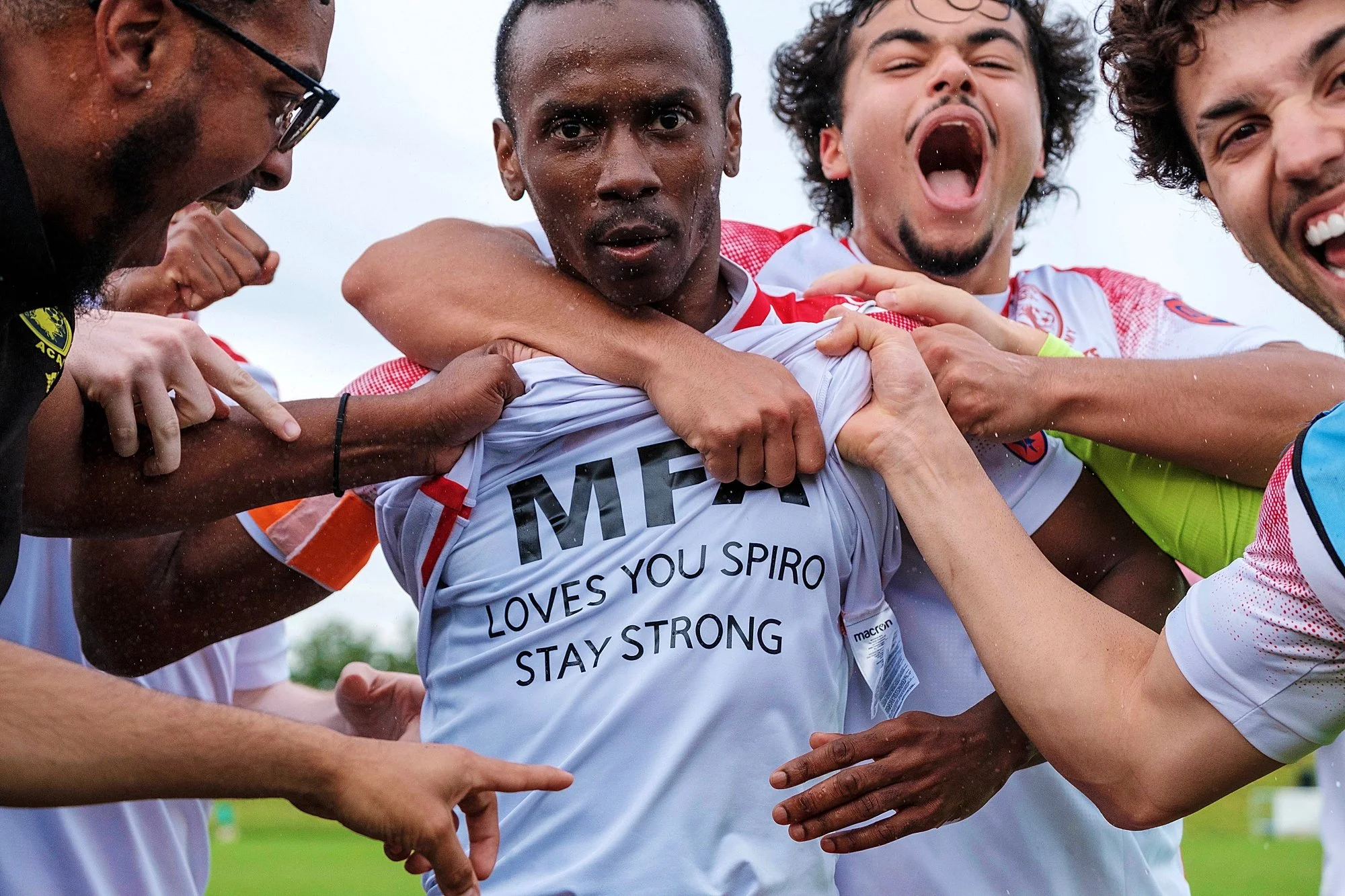
There is nothing more authentic than compassion and brotherhood. The attached photo is not only a goal celebration but a message to Spiro - a former player turned Goalkeeper Coach. A few days before this match, Spiro disclosed that he had been diagnosed with lymphoma and would miss the season to undergo cancer treatment. Terrell, pictured, is the captain. I’m the team photographer. The team is MFA (Master’s Futbol Academy of the Ontario Premier League). Terrell messaged me the day before the game. He indicated that if he scores, I’m to keep my camera ready for such a tribute. Terrell scored the winning goal and the story gets much better. Several days ago Spiro announced that his seven months of treatment paid dividends. He is now cancer-free. That’s ‘truth’.
See more of Paul’s work on his website.
WILLIAM RIGBY
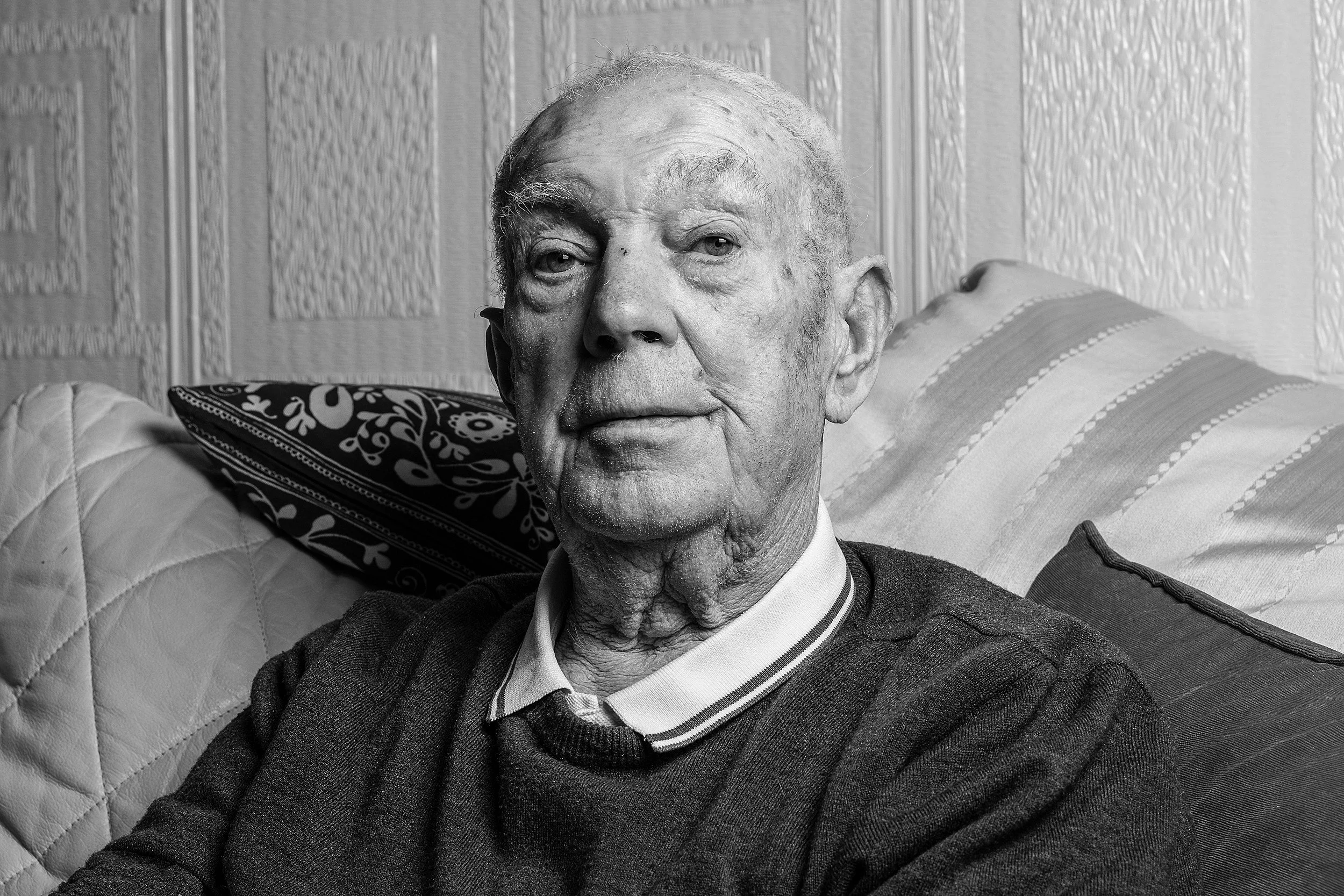
Though I didn't know it at the time, I took this photo of my late elder brother only a month or so before he died. Though there were lots of family photos of him when younger I had no images to show the man he had become, so I took this for myself and his own large family. I wanted to capture his portrait in the comfort of his own home and with no artifice. I'm so glad I took it when I did.
ADAM FLACK
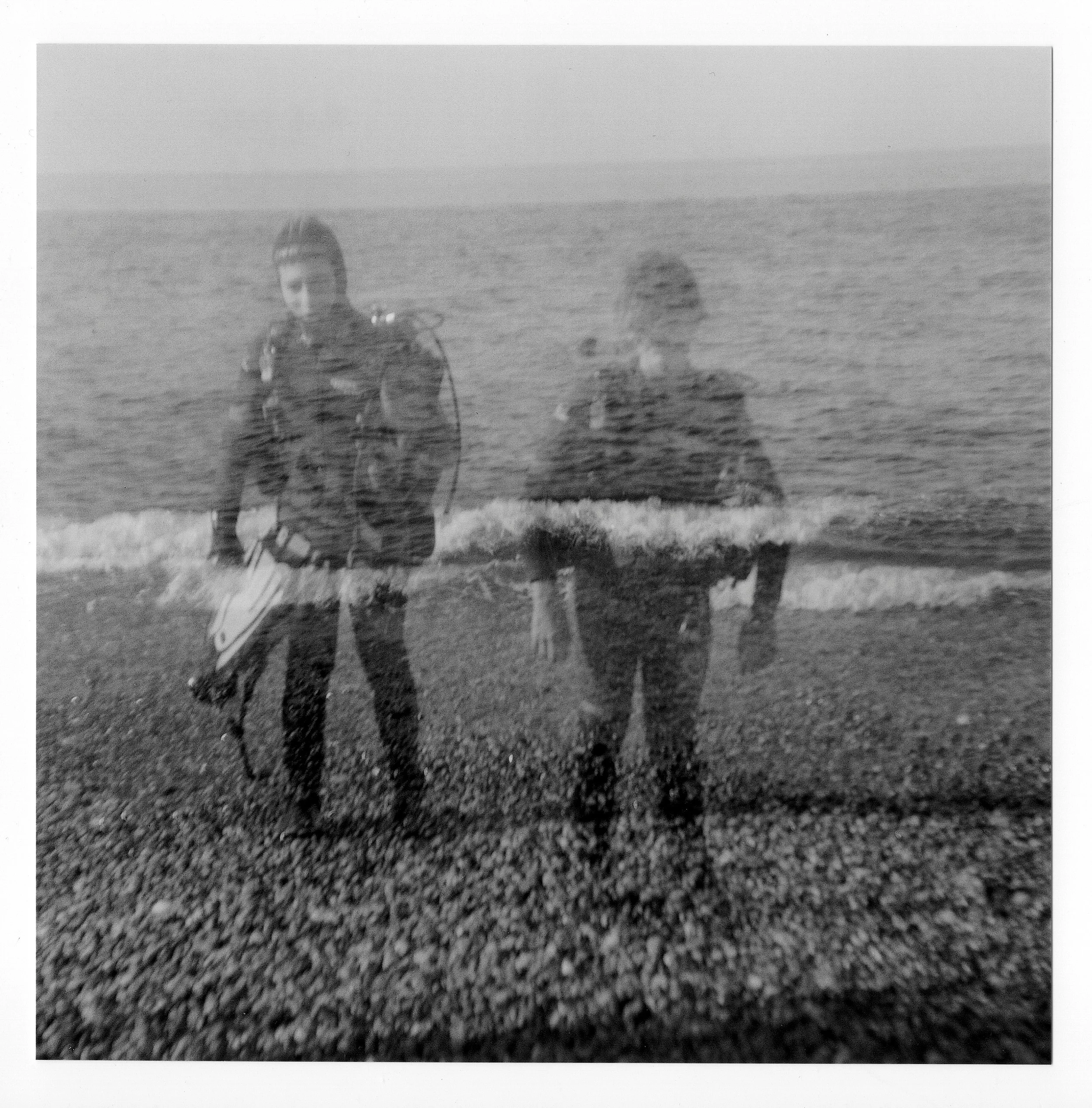
This image is one from my first attempt at using an Ilford Journeyman medium format TLR camera from c.1947. I accidentally double exposed this shot of my son emerging from the sea after his first scuba dive off the Norfolk coast. For me the image holds several truths in that the image itself was a mistake because either the winding-on of the film hadn’t worked or I had forgotten to do it. It is out of focus too… It took weeks to chose the 12 shots I wanted to take on the film roll and a couple more for the prints to return from the developer before I got to see them. Had it of been a digital photo I would undoubtedly have deleted it for all its imperfections straight away and likely reshot the moment...but it wasn’t and I didn’t. Despite all its imperfections I keep picking up the print and looking at it. I know it happened. I know it tells the truth of the moments captured of both the success and failure. Authenticity in error. That’s my truth.
See more of Adam’s work on FOTO.
DAVID HIGTON
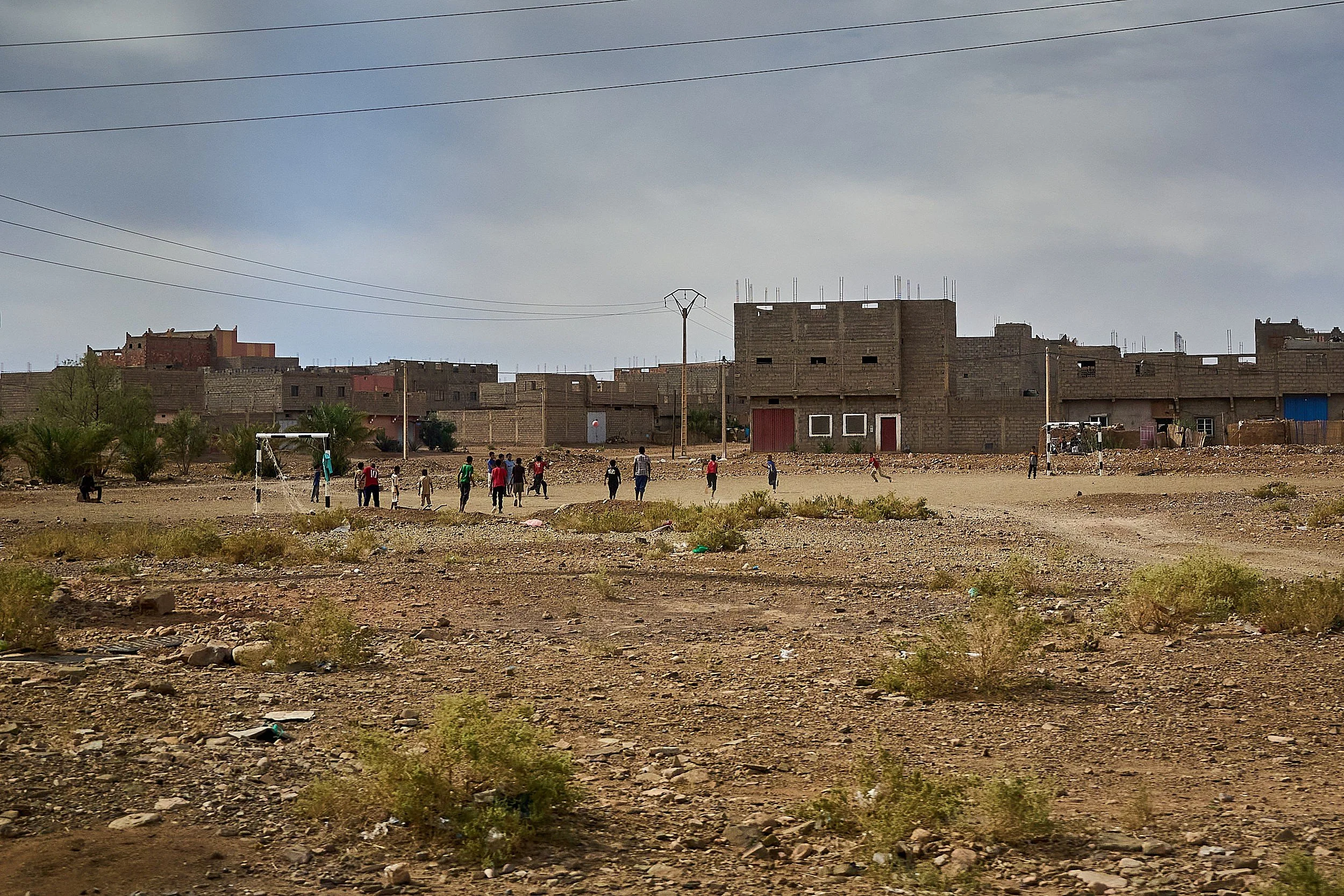
I recently visited Morocco, toured much of the country, and thought I'd attach one of my images from the trip for this assignment. The image was a drive-by shot as we passed a local town and shows youngsters having a kickabout on their local pitch. Morocco is fanatical about football (or soccer to your other listener on the other side of the Atlantic) and the country seemed to be littered with pitches similar to this one some in much more remote locations. The ground is pretty rough, no grass for them to play on but they look like they are enjoying their impromptu match, and playing with the truthful spirit of the game - just for enjoyment. This is a million miles from the top level of professional sport with pristine conditions, players occasionally exhibiting less than ideal behaviour and where ultimately profit is the driving force of the game, not the original spirit of competitive fun.
See more of David’s work on Instagram.
BOB LITTLE
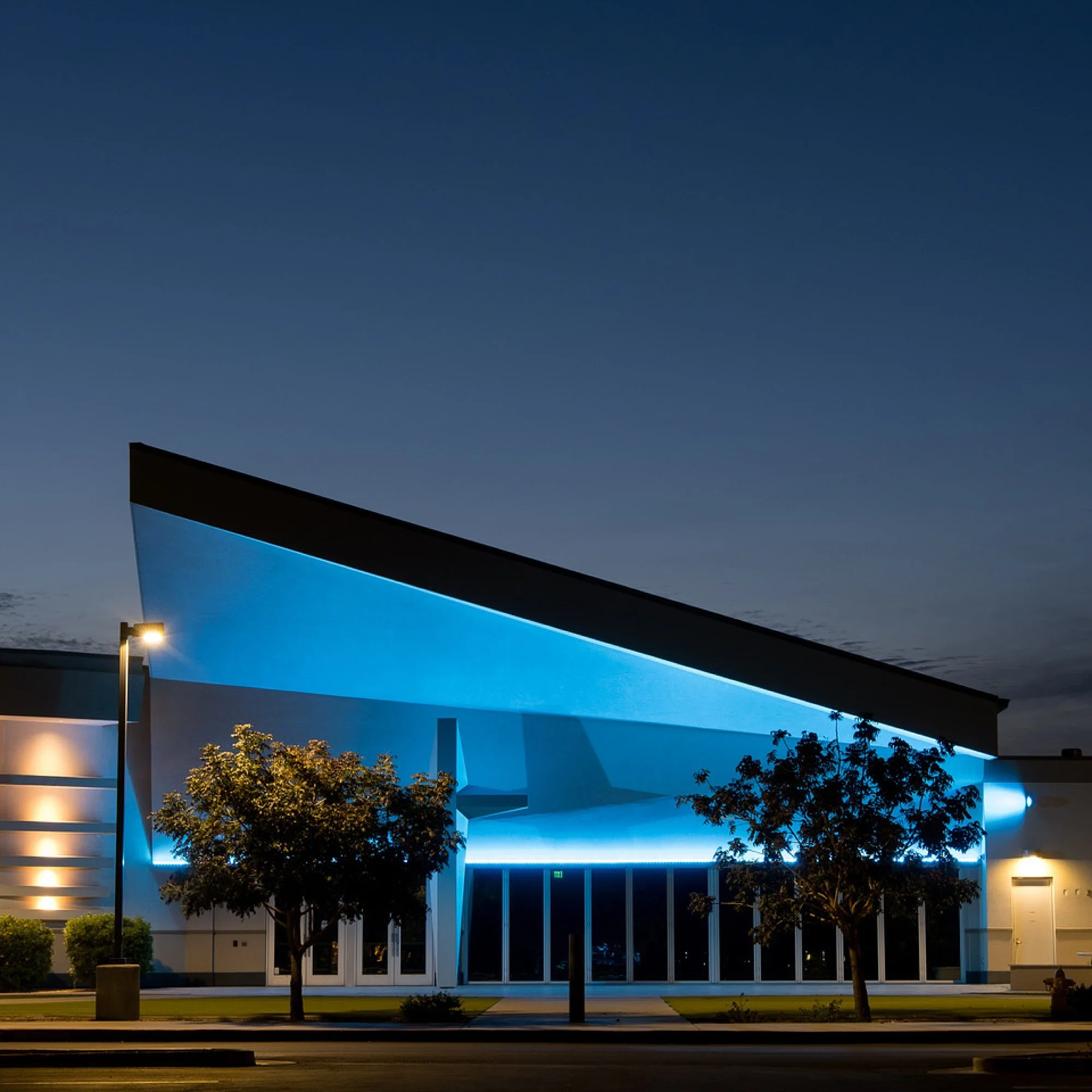
Title: Risen Savior. A new church arose in the neighborhood and the night time blue color is very distinctive.
See more of Bob’s work on Instagram.
RICHARD RAWLINGS
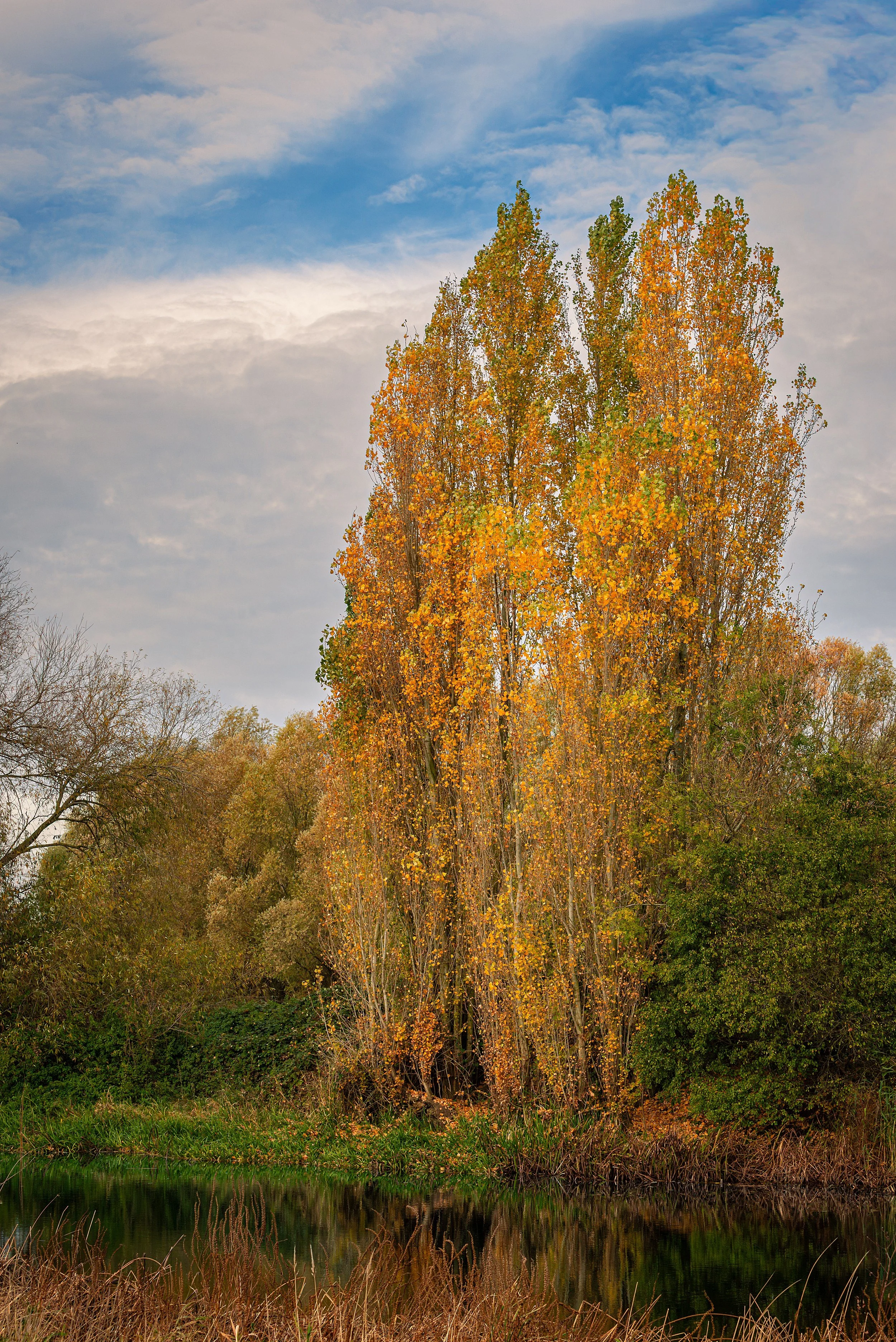
There comes a time when you swear and do it anyway.
Both locations in these works are real. A stand of poplars near a gate inspired the writing. The poplars in the image are real. They were particularly beautiful this morning.
The thing with AI is it has no lived experience. It can only copy and advise on the works it is fed. It can describe a rainbow but never experience one. Robert Heinlein discusses this in a book called Time Enough for Love when he talks to a computer. She finally admits she is blind. This is why my AI is called Blind Athena.
There are two truths in life. Things start, and things end. Trees do it every year. People do it over a period of years. This is the writing to go with the image.
Twilight.
The summer sun is fading.
It lights up the edges of grey fleck clouds in golden amber,
Dappled light falls over fields of freshly tilled earth,
remnants of plants still visible.
A gateway, a hedgerow,
a stand of poplars,
their silver-grey trunks standing tall, piercing the sky.
Their crowns decked with yellow-green leaves shimmering in the gentle breeze.
Starlings swarm around at once landing and nosily taking off again announcing themselves in shrill raucous voices.
A lone figure is draping himself on the gate.
He pushes his cap up with one finger,
watching the puddles of light as they play across the field.
Another time another place.
The damp from the grass leaches its way through his shoes,
into his trousers still he stands.
His elbows on the top bar, head resting in his hands.
The breeze stiffens slightly and catches his coat it flaps lazily around his legs.
Hearing the rustle of the leaves he looks up, then back.
An endless stare over a barren field.
Slowly he stands, hands on his back he stretches, easing the stiffness,
bringing little relief.
No one hears the sigh
No one comes
A fox sniffs around some brown cloth then moves on.
Rabbits play on the pile.
The trees stand tall,
their leaves catching the wind and shimmering in remembrance of a life.
KATHY CONZELMAN
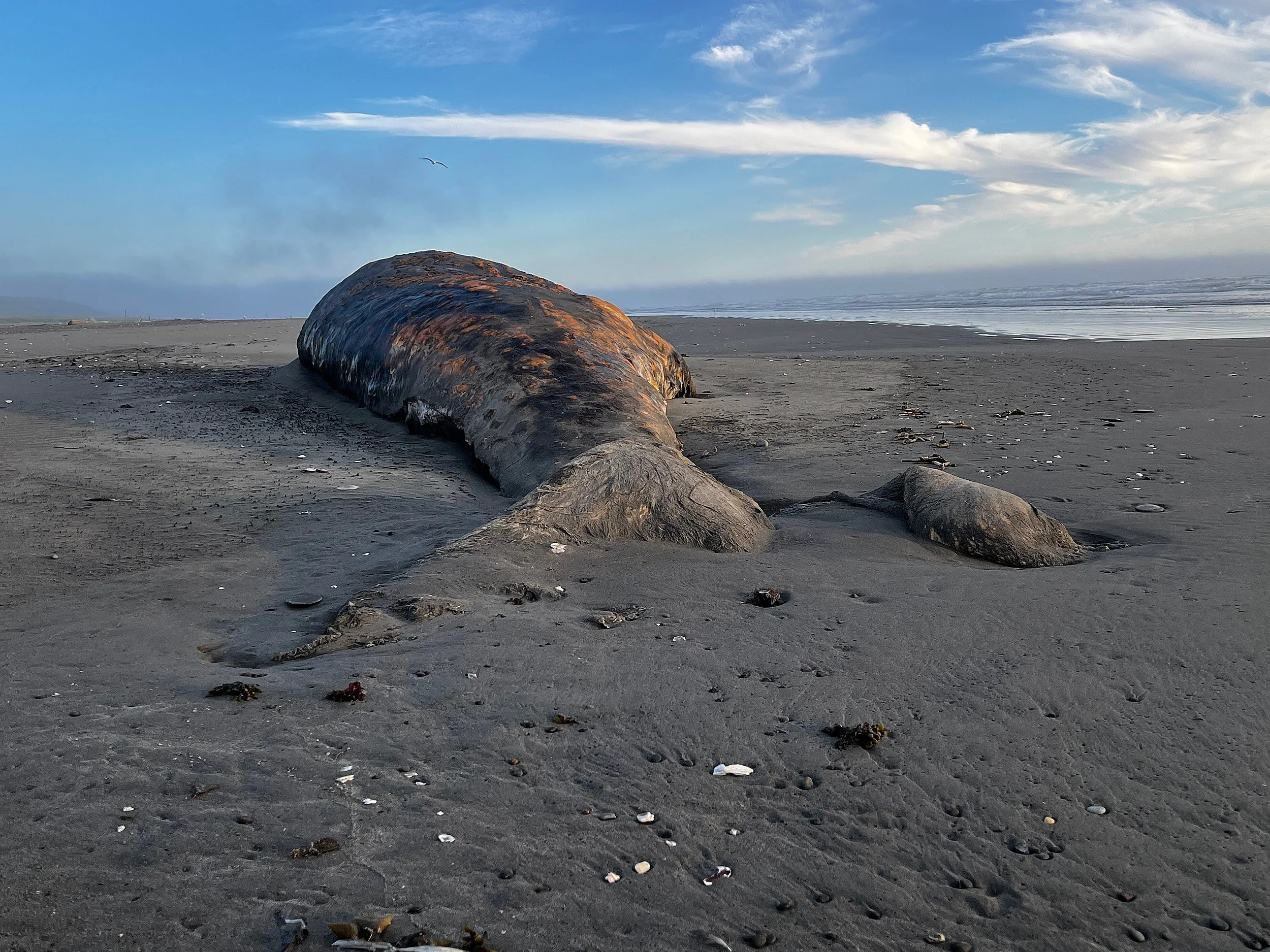
This past summer I was at one of my favorite places along the Washington coast and on my walk came across a whale carcass. I'd heard that there were a few washing up on the beaches along the Washington and Oregon coastline.
The truth is that there have been, not just a few, but a staggering 192 dead Gray Whales reported off the North American Coast from Mexico to Alaska this year. Many of those deaths are attributed to malnutrition and starvation, which is linked to melting Arctic ice and warming oceans that deplete the whales' main food sources.
The truth lay before me, rotting on the beach in the summer sun.
The implications and the sadness weigh on me still.
See more of Kathy’s work on Substack.
JEFF SMERALDO
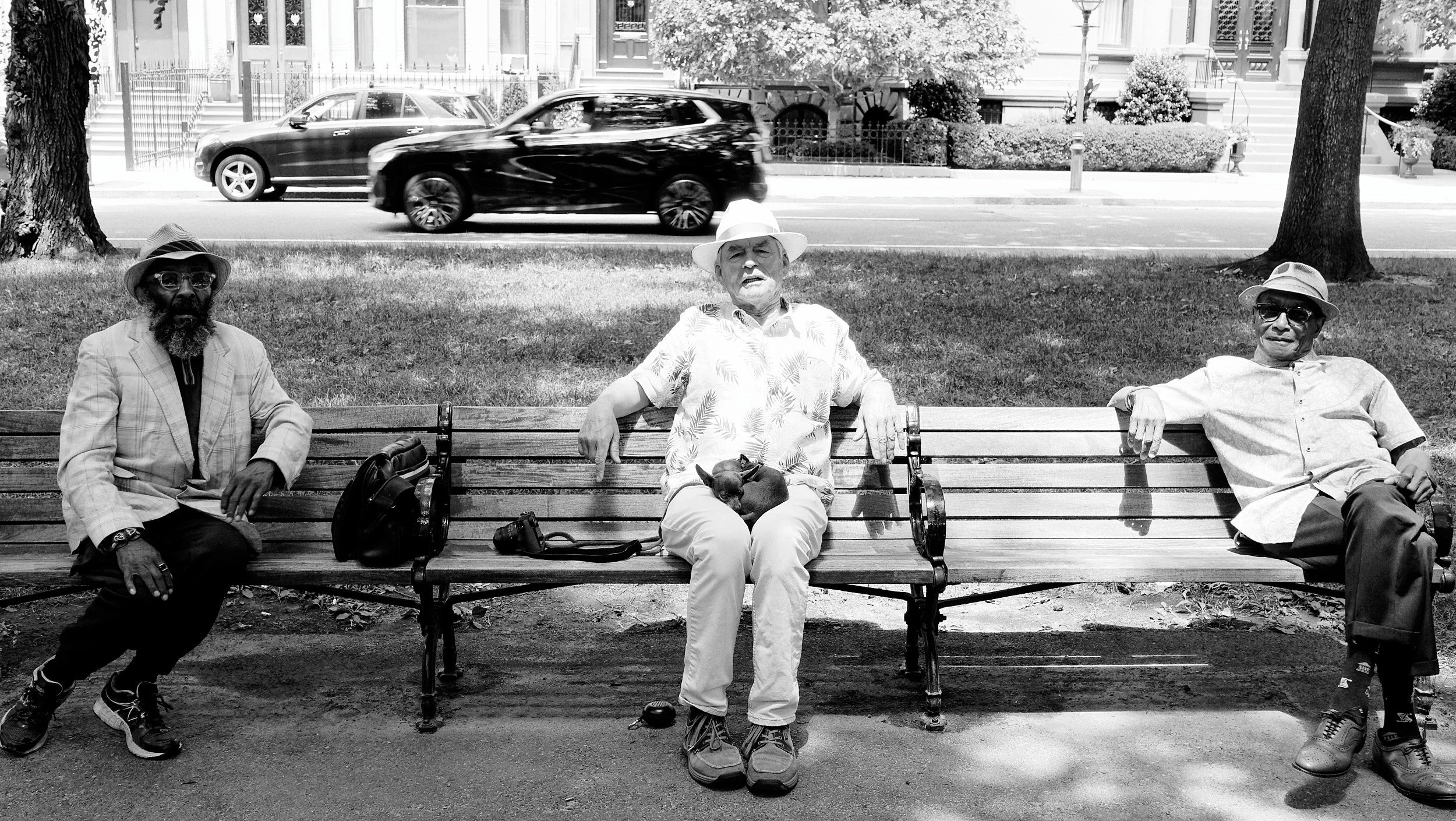
I recall Platon assigning “truth”, and you will know it when you see it. Well, I was walking along the park on Commonwealth Avenue in Boston (Comm Ave to the locals) and I saw these three gentlemen conversing, listening to some Dave Brubeck and discussing all matters of life. I thought that they were longtime friends and what a great way to spend an afternoon… and I kept walking. I got about 100 feet further, stopped, and said to my wife, I really should have asked them for a photo. She was like, “I am surprised you didn’t.” I am still struggling to ask strangers to make photographs but I was compelled to take the shot. I walked back and asked if they would mind if I took a photo of them, and the gentleman in the middle said, “Now I know you’re a true photographer because you didn’t pass this up”, as he gestured to the three of them. Seeing the Leica Q on the bench, I would make a fair assumption he knew what he was talking about. He then said to the gentleman on the left “Mr. T, pay attention and participate” then I took the shot and thanked them. I think this experience shows a few Truths: good friends are always a treasure, being kind to one another, and encouraging others to work on their art.
DREW BROWN
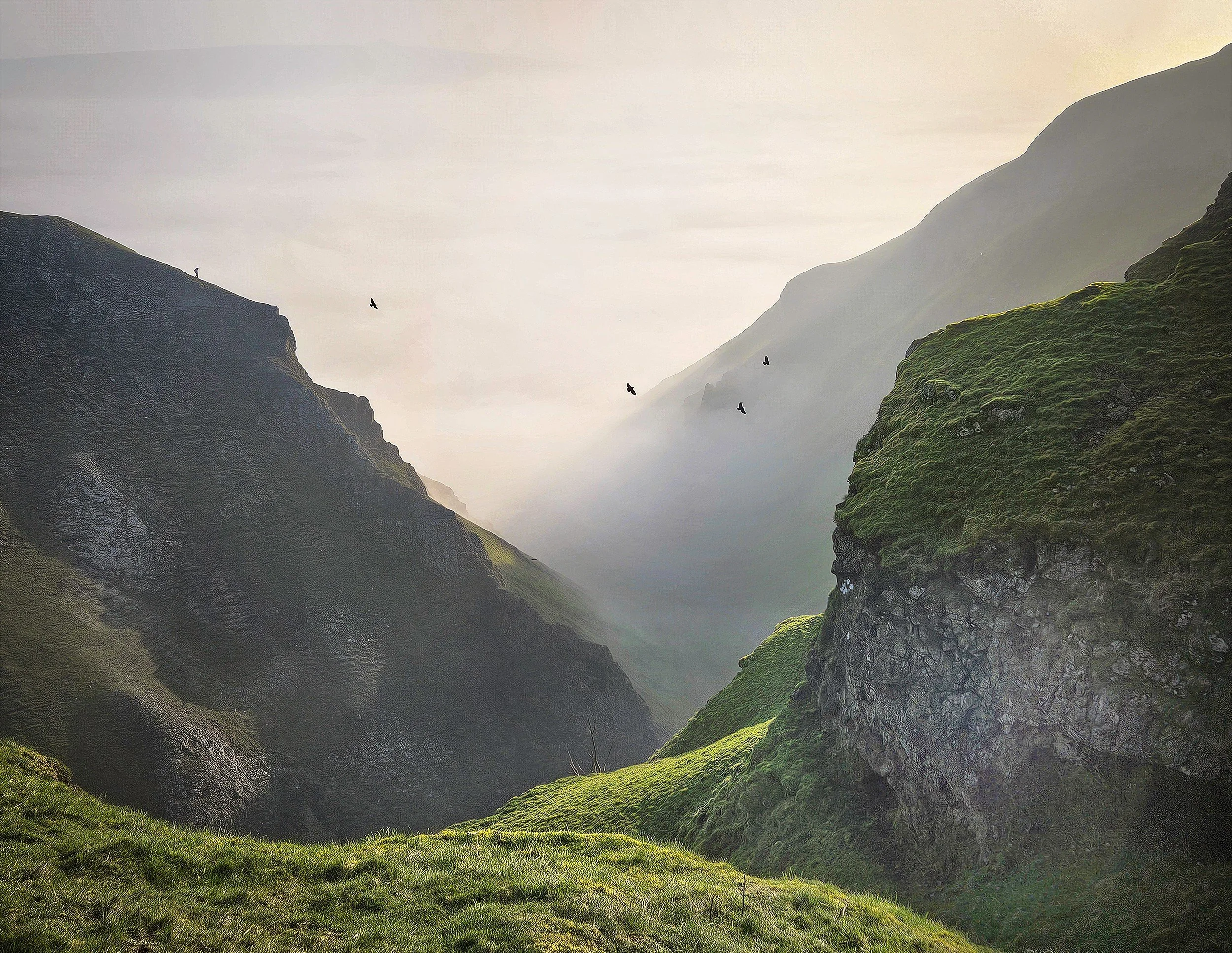
On some photo walks the elements align and you cannot quite believe what you are witnessing.
This is Winnats Pass in Castleton, one of the most beautiful parts of the Peak District. I thought this scene looked like an AI creation from the request, ‘create a photo overlooking Winnats Pass, with a temperature inversion and add some birds flying across the scene’. Well, this photo is not AI; it was made in the moment on a stunning early morning, and that is the truth.
See more of Drew’s work on Instagram.
KEITH JOHNSON
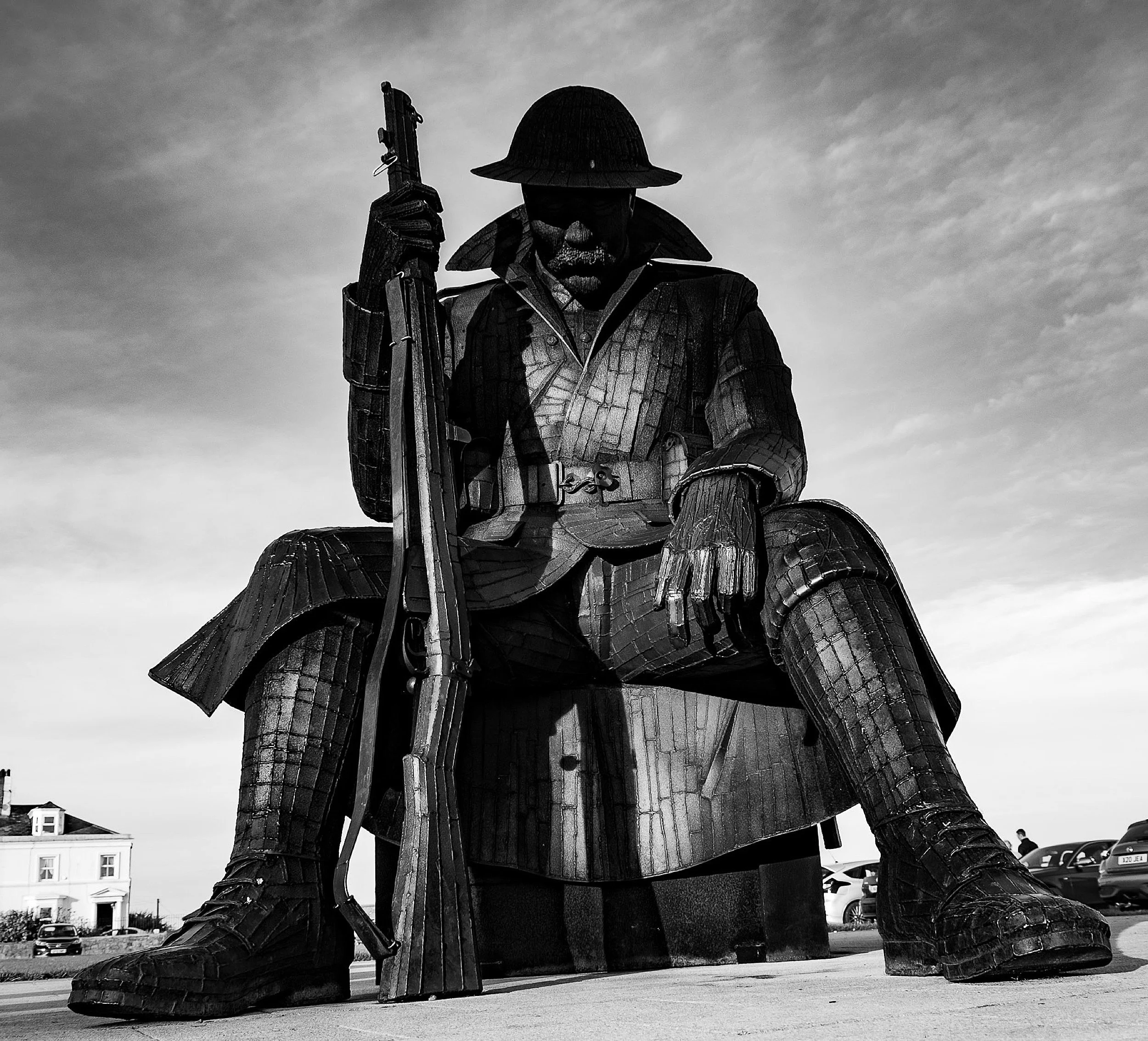
“Tommy” stands on the seafront in Seaham, County Durham. It is 9 feet 5 inches tall, made of steel and was created as a war memorial.
ROB LEE
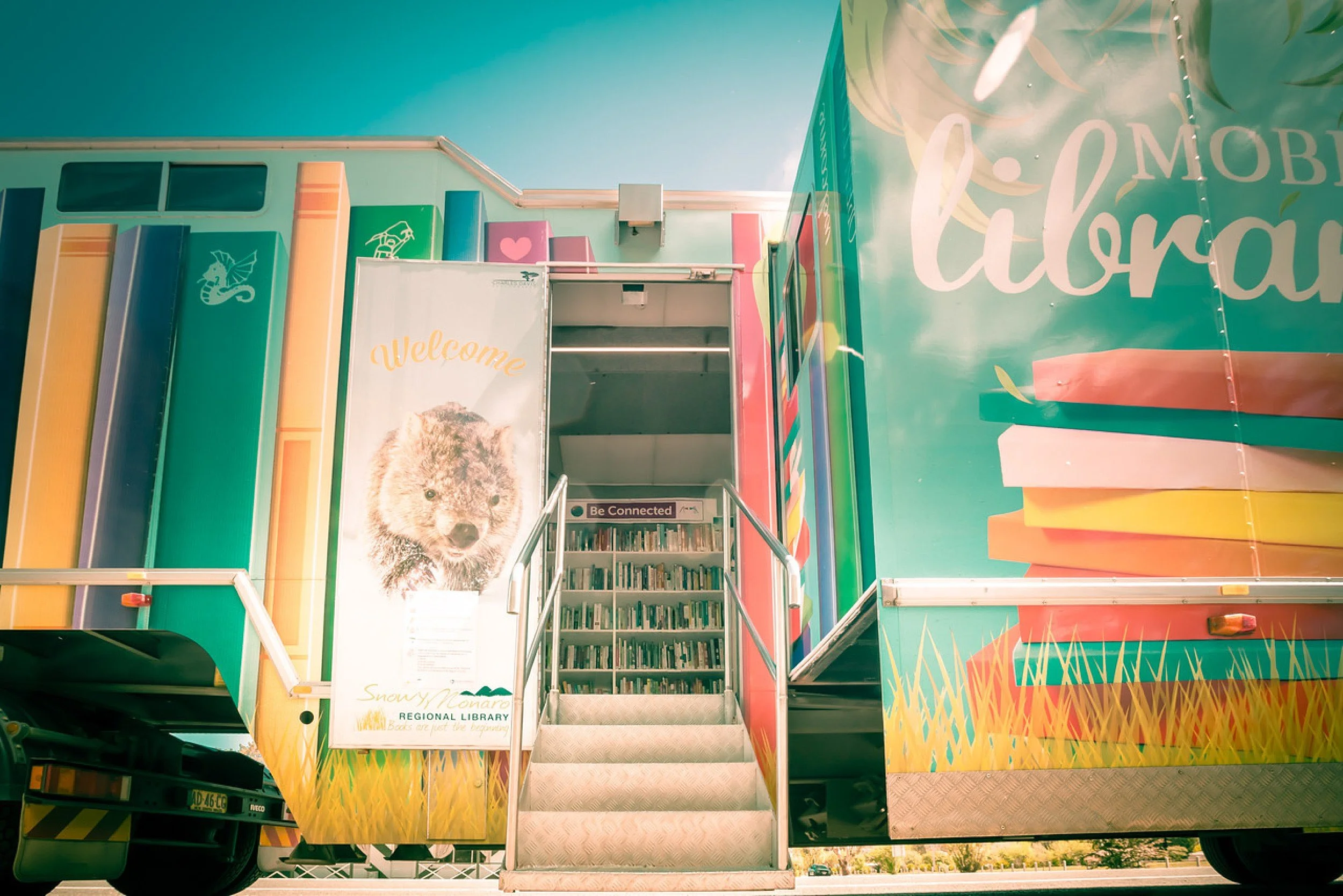
What do libraries have to do with truth? Not a lot. They have always been about information. What you do with that information may bring you closer to a form of truth. From this perspective, a lorry full of books visiting a small country town, is no different to the National Library of Australia.
See more of Rob’s work on his website.
DAVE SKINNER
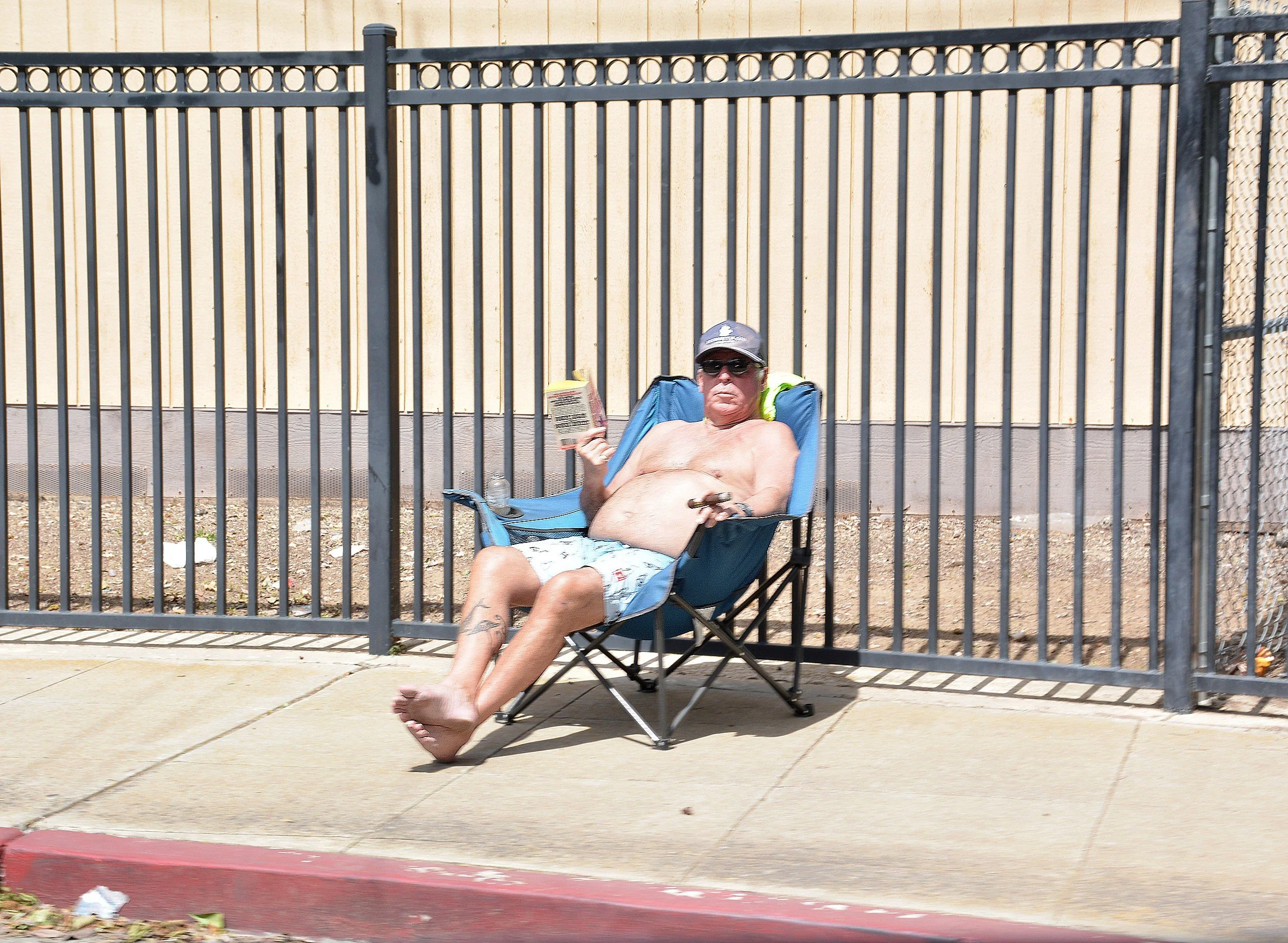
After shooting on a nearby college campus, I headed home when I saw this fellow sunning himself on a side street in April. I had to turn around and get a driveby photo because I couldn't believe what I was seeing - the folding chair, the sidewalk, a book in one hand and cigar in the other, the bulbous belly! I didn't stop to ask what was he reading. Unfortunately, I didn't adjust the shutter speed for this capture.
See more Dave’s work on Instagram.
NEALE JAMES
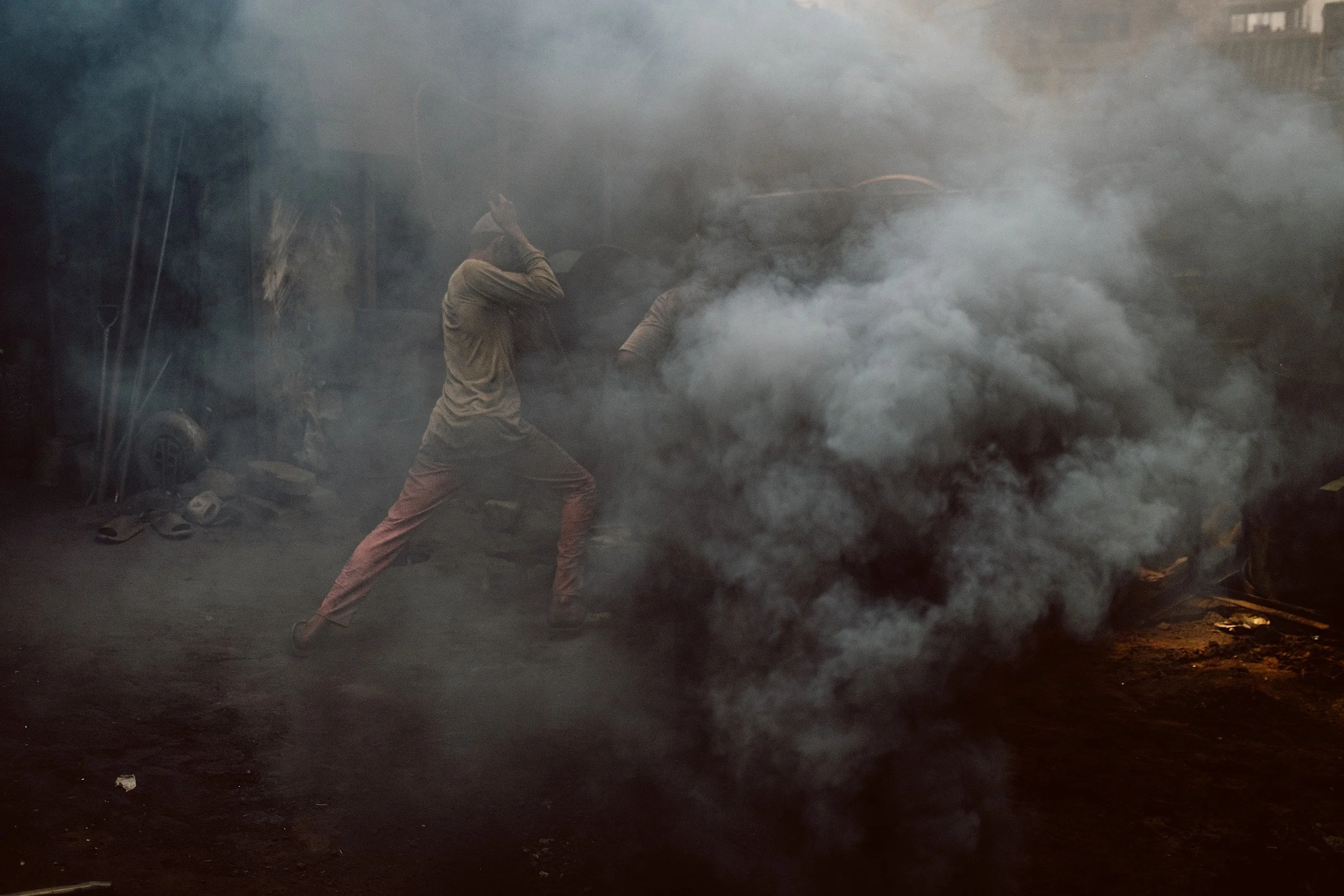
Thick plumes of acrid smoke billowed from small floor-seated blast furnaces along the narrow avenue of a smelter’s yard behind a ship reconditioning yard in Dhaka, Bangladesh. Young men work over relentless, oil-fed furnaces, melting scrap metal at temperatures ranging from 1,200 to 1,600 degrees Celsius, using long metal rods and other basic tools to work the molten metal, before pouring it into moulds to produce replacement propellers for ships and boats undergoing repairs. It struck me that health and safety measures were limited, including the access we were given as a small photographic team. At one point, as I reversed to get a better composition with a fixed 35mm focal length, a yard worker appeared behind me and guided me away from a mould still simmering on the ground I was about to step on. Masks were in short supply, hard hats non-existent, clothing light and footwear even lighter; note the sandals being worn just inches from the fires.
It would be all too easy to compare the standards here with what I might expect ‘back home.’ But that strikes me as a rather Western way of looking at things, and a lazy observation at that. Life in these informal markets across the city is a truth in its own right, one that calls for understanding on its own terms, rather than judging it against ours.