#513 THE ONE: BIG PICTURES FROM 2025 PART 1
FEATURING FIVE SPECIAL GUEST PHOTOGRAPHERS
Before Christmas, I asked you to send me one photograph from 2025. Not necessarily what you consider to be your best, not your most liked, and not something measured against anyone else in either competition or social media terms. Just the picture that said to you, “This was my 2025.” The one you kept coming back to. My plan was to invite ten photographers to the first episode of 2026 to talk about their pictures and the why behind them. Over a hundred arrived, each with a story attached, and it quickly became clear with the compelling stories you sent in, we’d need to spread this across two editions, and so that, is where we are.
As I spoke to the people behind these pictures, the conversations opened out into how we see, why we photograph, and what was going on in life when the shutter was pressed. This episode is the first half of those conversations. Unrushed, unscripted, and simply photographers talking about images that meant something to them, and by extension, saying a little about themselves.
David Wright reflects on serenity in photography through an image that feels like an emotional time capsule. John Charlton talks about a Northern Lights photograph whose meaning runs far deeper than the light in the sky. Wayne Richards joins me on the path to talk about a rag tied to a railing that all but demanded to be photographed. Kim Cofield shares thoughtful advice drawn from her experience of making animal portraits, and Mark Creamer looks back on a photograph made in the middle of a disaster zone.
Also today, news about a ‘NEW’ photography podcast, and an invitation to come to Scotland in 2026 and further afield to India, Mongolia and Venice.
Email your stories, thoughts, and pictures to the show. If you can optimize/resize photos to 2,500 pixels wide, that’s always much appreciated. If you’d like to support this show and have access to further content and the midweek Extra Mile show, we’d welcome you as an EXTRA MILER. There’s also our thriving Facebook group, a safe place to meet and talk with photographers of all interests, the Photowalk YouTube channel, plus the show is featured on Instagram, VERO and X.
As well as our Extra Milers, we’re also supported by our friends at Arthelper.ai who make marketing easier, helps more people find your work, and keeps your voice true—so you can get back to what you love most: making art. Enter PHOTOWALK at checkout to receive 30 days of the pro version free.
PLEASE HELP TO BUILD OUR COMMUNITY BY SHARING THIS EPISODE TO YOUR FAVOURITE SOCIAL PLATFORMS
LEARN:
MORE ABOUT names, words, THE MUSIC and places FROM TODAY’S SHOW
Join us on the Black Isle near Inverness, for the Scotland ‘26 retreat, staying on a working soft-fruit farm with Highland views. The retreat includes small creative workshops, from photogravure printing to sound and writing sessions, plus plenty of time to walk, talk and make photographs together.
Tish Murtha was a documentary photographer whose work stayed close to working-class life in the North East, photographed with honesty, care, and a deep sense of belonging rather than distance.
"Not Waving but Drowning" is a poem by the British poet Stevie Smith. It was published in 1957 as part of a collection of the same title. The most famous of Smith's poems, it tells the story of a drowned man whose distant movements in the water were mistaken for waving.
Shirley Baker photographed everyday life on the streets of Manchester and Salford, catching ordinary people mid-moment with warmth, grit, and a sharp eye for human detail.
Chris Killip was a British documentary photographer best known for his raw, unsentimental pictures of working class life in the North East of England during the 1970s and 80s, when communities were under real pressure and his camera was right there with them.
Lee Miller was an American photographer and war correspondent who documented the Second World War from the front lines, as well as working earlier in her career as a fashion and surrealist photographer in Paris.
Tom Stoddart was a British photojournalist known for his long career covering conflicts and humanitarian crises, with pictures that focus less on combat and more on the lives caught up in it.
The RPS Documentary Group brings together photographers who are committed to documentary work, using photography to observe, question, and make sense of the real world over time rather than chasing quick or decorative images. See the latest Decisive Moment.
The Northern Lights, or aurora borealis, are a natural light display caused when charged particles from the Sun hit Earth’s atmosphere, creating slow-moving curtains and arcs of colour across the night sky near the poles.
360 cameras use two or more lenses to record everything around them at once, letting you capture a full scene and decide later where to look when you view or edit the footage.
Anamorphic cameras use special lenses that squeeze a wide image onto the camera sensor, then stretch it back out again, giving films that wide screen look with the distinctive oval blur and horizontal flares people recognise from cinema.
Kelvin Brown’s flickr Photowalk inspired group - join by invite by clicking on to THIS LINK.
MUSIC LINKS: Narrow Skies wrote today's playout song Auld Land Syne. Music on the show is sourced primarily from Artlist and also features in Michael Brennan’s Spotify playlist GoFoto. For Apple Music users, follow this playlist.
CLICK LINKS FOR OFFERS AND SUPPORTERS


THE SHOWPAGE GALLERY
IN ORDER OF APPEARANCE: WAYNE RICHARDS
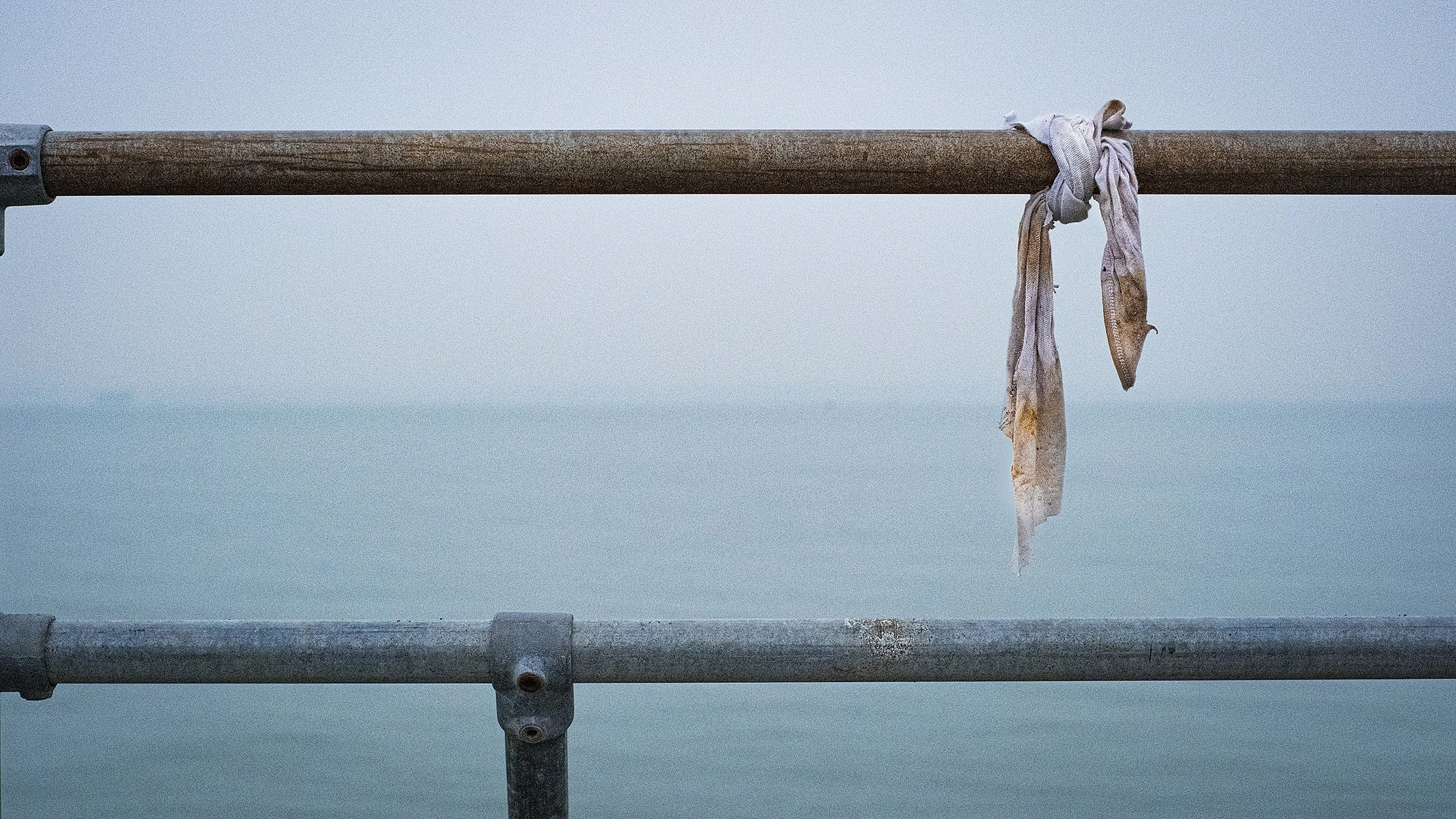
The Royal Academy Summer Exhibition is the world's oldest open submission art show, running annually since 1769. This year around 1,000 works were selected from the 18,000 entries and I was delighted that this image was one of the relatively few photographs selected for exhibition.
Not Waving but Drowning was a particularly significant image for me this year because it crystallised several strands of my practice - quiet observation, emotional ambiguity, and the tension between surface appearance and deeper narrative.
The moment I captured carried a duality that resonated immediately: a symbol that could be read as inconsequential or as a call for help. Seeing that nuance recognised by the Royal Academy through its selection for the Summer Exhibition
felt affirming, not only of the work itself but of the direction my broader documentary practice is taking.
The fact that the piece subsequently sold added another layer of meaning. It suggested that the emotional register I was trying to articulate - something subtle, unresolved, and human - connected with viewers beyond the context
in which it was made. In a year when I have been reassessing my creative trajectory, Not Waving but Drowning has been an anchor, reminding me why I make photographs and which kinds of stories I am most compelled to pursue.
KIM COFIELD
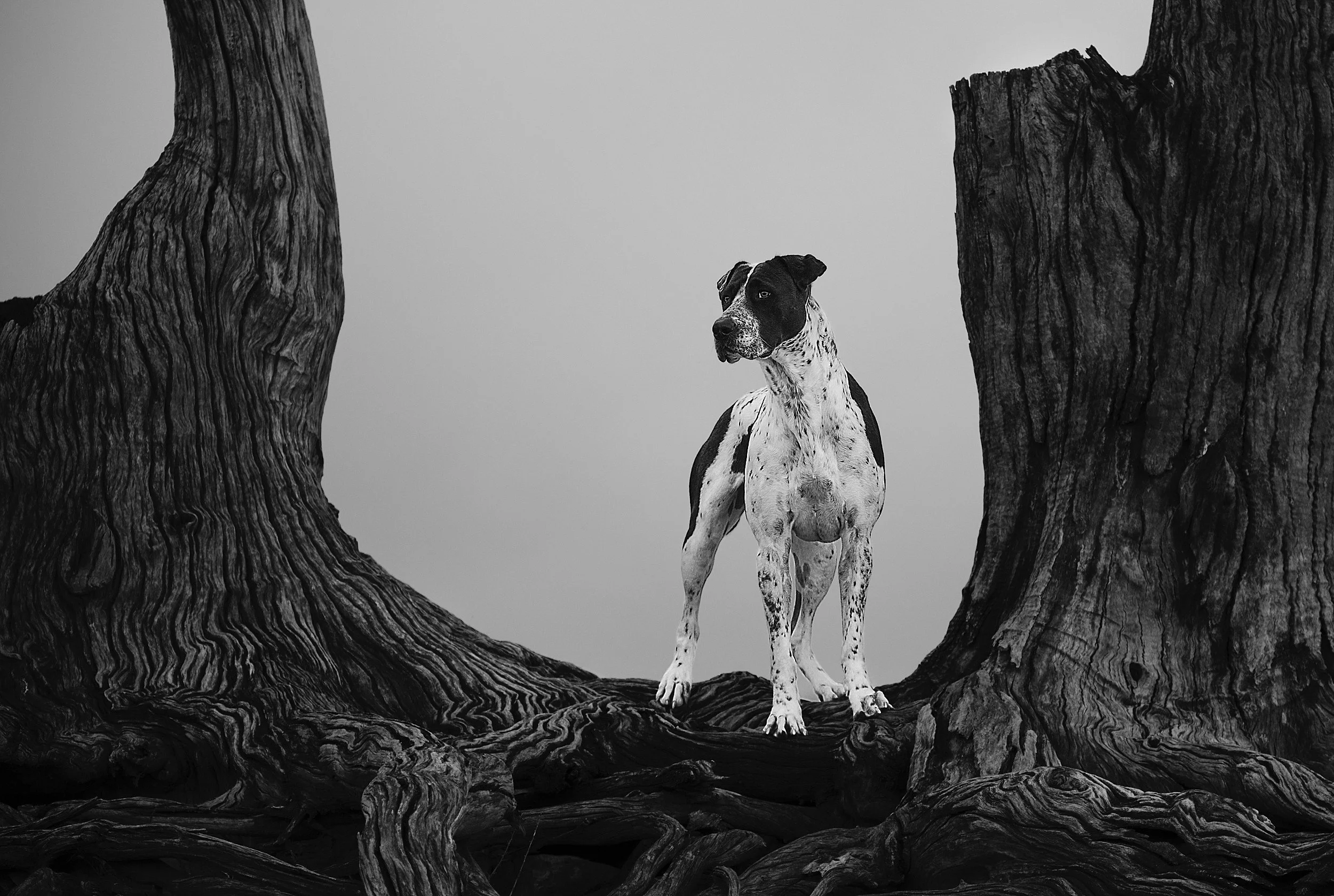
Why is this photo The One? Well, this photo represents everything I have been striving to achieve with my dog photography. When I first set out to become a dog photographer, everywhere I turned to for inspiration presented me with photos of dogs in European forests and European urban areas. They are so far removed from my reality here in Australialand, I did not think I would ever be able to have any success. However, when I met my photography mentor in person last year, I came to see that I could, in fact, use the landscape around me. I simply had to look using my eyes instead of thinking I had to mimic others.
My favourite location to walk Theo and Claire has countless dead trees as well as fallen dead branches and trees. This particular tree we often walk by had caught my eye unknowingly until one day it hit me - it would be the perfect location to place a dog. I love it when an idea works out, in this case, a lot better than expected. I think will always remain one of my favourite photos.
See more of Kim’s work on Instagram.
DAVID WRIGHT
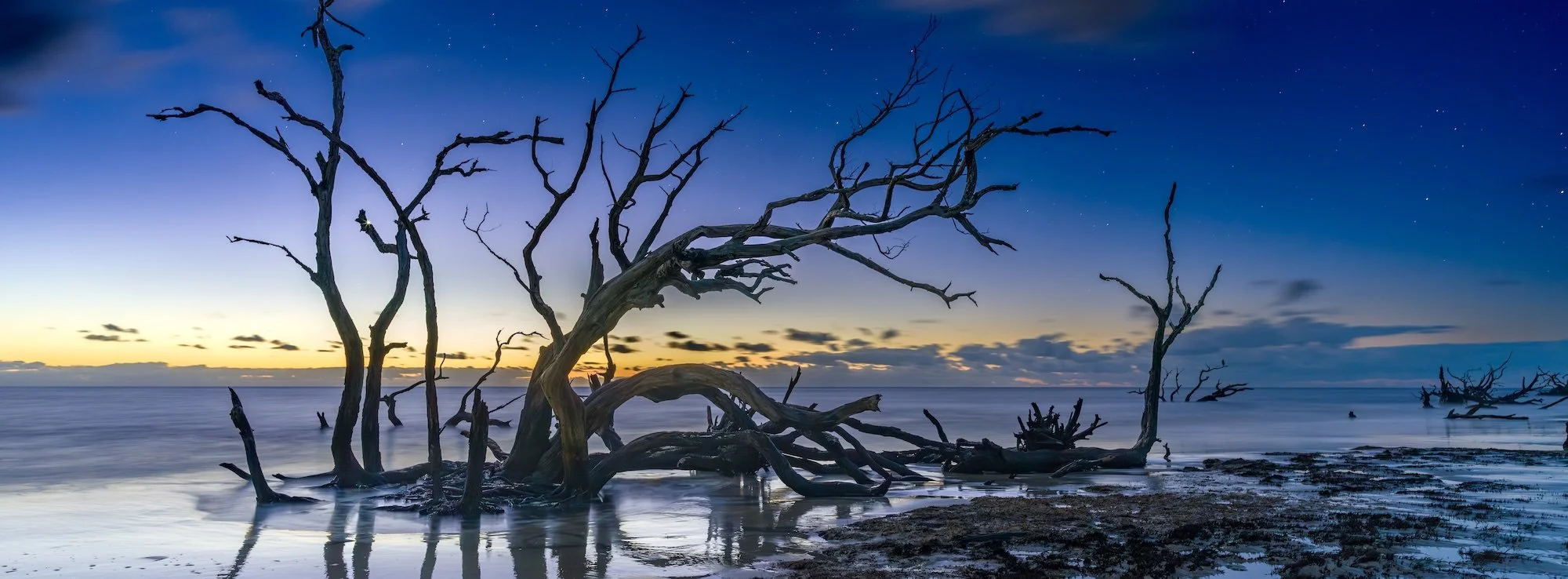
This beach holds a special place in my heart, serving as a sanctuary through the darkest moments of my life and a source of joy during my highest peaks. Losing my mother to cancer at such a tender age left me grappling with deep emotional challenges. In my quest for peace and meaning, I turned to nature, discovering a profound love for landscapes and wildlife that has brought beauty to my journey.
Her passing left me with few memories, a fact that weighed heavily on my heart over the years. My father, navigating his own grief, adopted a "keep calm and carry on" approach, leading to an unspoken silence about her that caused those memories to fade away.
A turning point came when I sought help from a gifted psychologist who practiced hypnosis. Initially skeptical, I found the experience transformative. Through our sessions, I was able to reconnect with memories long buried, including one that has become particularly precious. It was a final holiday with my mum, a moment filled with warmth and love—standing on the beach, hand in hand, listening to the gentle rhythm of the waves and inhaling the salty sea air.
Now, I return to the ocean whenever I seek solace or a moment of clarity in life. It is this connection that draws me to Jekyll Island, where this photograph was captured, a reminder of both my past and my journey toward healing. Thank you for allowing me to share this piece of my heart.
(Captured with a Hasselblad in Xpan crop just before sunrise)
See more of David’s work on his website.
MARK CREAMER
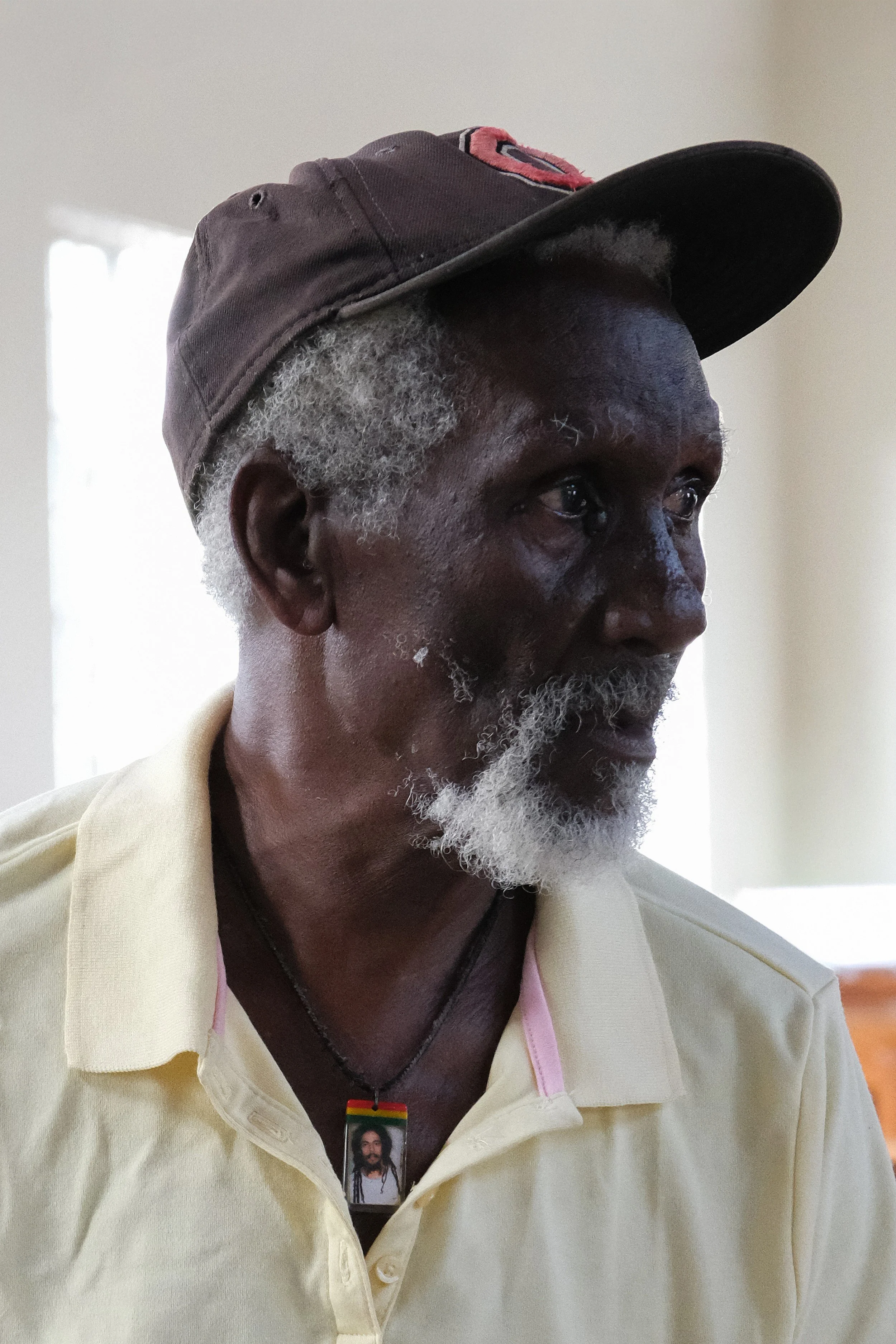
I work for an international humanitarian relief organization based in Ohio as its IT Director. The one thing I love more than anything else with my job is when we are able to travel on disaster response trips to the places our organization supports. For years we have gone to Haiti but that has become impossible due to the dangers present in the country. So when the opportunity came last month to travel to Jamaica in response to the Hurricane Melissa disaster, I jumped at the chance.
We traveled with 3 doctors, a registered nurse and a pharmacist, along with support staff, including me serving as photographer documenting the work. Over 3 days, the doctors saw over 340 patients, treating minor injuries, evaluating medical conditions like hypertension and diabetes, and most importantly, just being present to the people affected by this unprecedented disaster. Many of them just want to know they are not forgotten, not ignored, even as the US media quickly moves on to the latest political bickering or "toxic voyeurism" in the news.
I am always amazed at the attitude of people in situations like this. It is humbling to talk to someone who has lost everything, yet they are so gracious, so thankful, and so optimistic for the future. It puts my little daily irritations in a whole new perspective.
Milton, the gentleman in this portrait, had his home flattened, and is living with relatives who aren't much better off than he. I was able to sit with him and just listen, as he spoke of how things will be getting better every day. As he left, he held my hand tight and thanked me for speaking with him.
I captured several photos of him, and I like this one best. He has wonderful character in his face. I am better off for having met this man.
JOHN CHARLTON (2 pics)
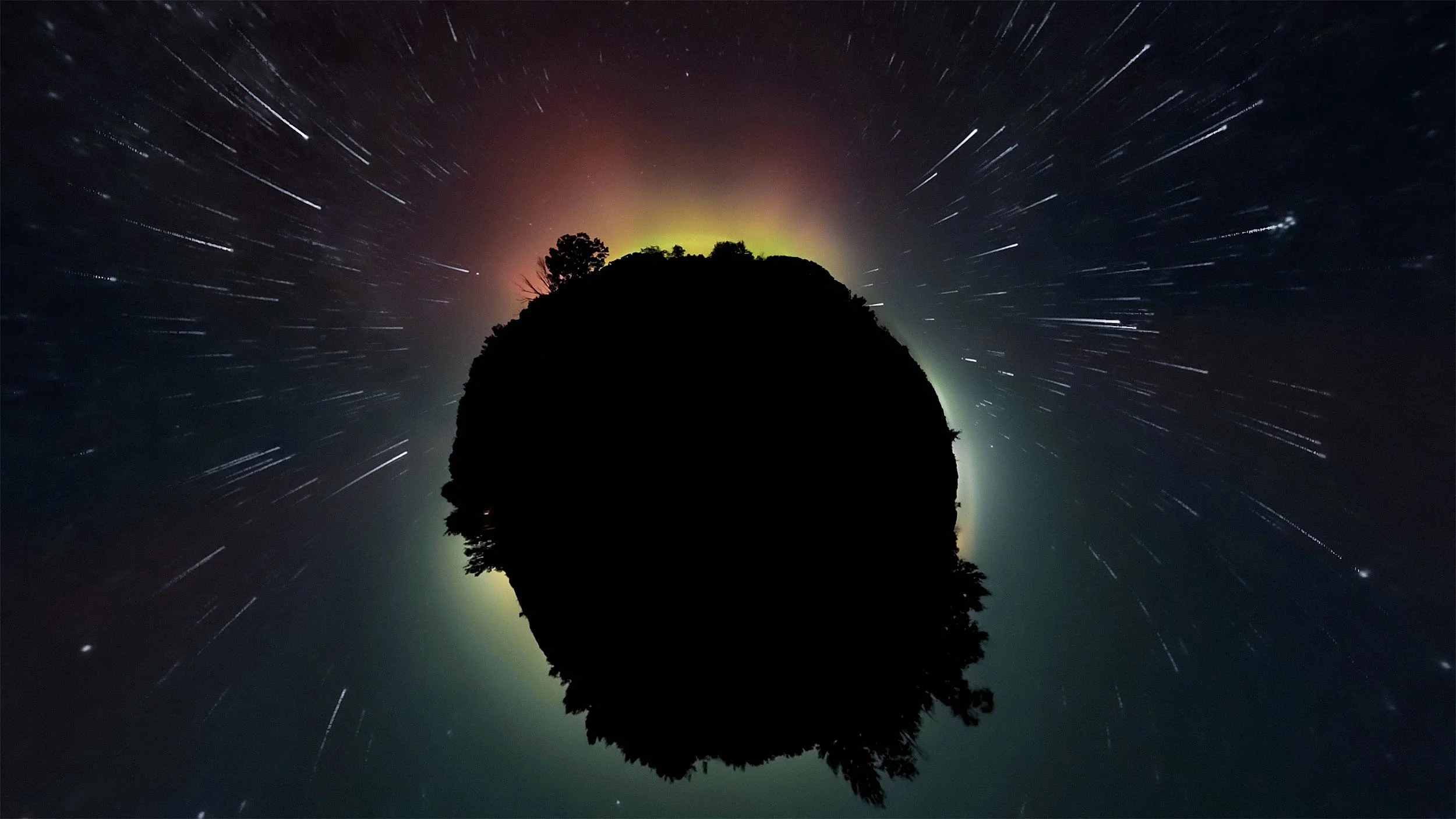
For me this was the year of living alone. Following the death of my partner of almost 50 years in October 2024, this year has held many challenges. Photography has been my companion as I begin to forge a new identity from the shards of my shattered self-image.
This photograph from September 30th stands out as 'the one' for a number of reasons, not the least of which is that it was made with an entirely new type of camera for me, a 360-degree action camera. I acquired the Insta360 X5 in June after being impressed by some Northern Light images made with it, which were posted on a Facebook aurora chasers group. With my camera and tripod set on the east lawn next to our house, I captured the darkness around me and the nearby trees stretching skyward. The house sits mostly in darkness just inside and below the 9 o'clock position, with a single incandescent light source shining from the back room of the house. Wrapping counterclockwise around the tiny planet view from southwest to northeast, you can see light pollution from the GTA (Greater Toronto Area) 90 miles away in the 8 o'clock position and the much closer bright lights of Belleville, Ontario at about 3 o'clock. Post-processed in startrail mode, the software builds trails from the stars moving through the roughly 150 time-lapse frames exposed over the course of about 30 minutes. At the top of the frame, the Aurora Borealis rises in yellows and reds under the north star, which remains as a single, unmoving point of light.
The night Ruth passed, I stepped outside to see the aurora shining brightly above our driveway. I took it as a sign. Now, whenever I see the aurora, it's like her waving at me. In a way, this unusual landscape image is a self-portrait, but there are two of us in the picture. A 23-second movie from which this frame was taken can be viewed within my Substack post entitled Eye in the Sky. The movie sets this still image in motion, showing the aurora rising behind a large oak tree.
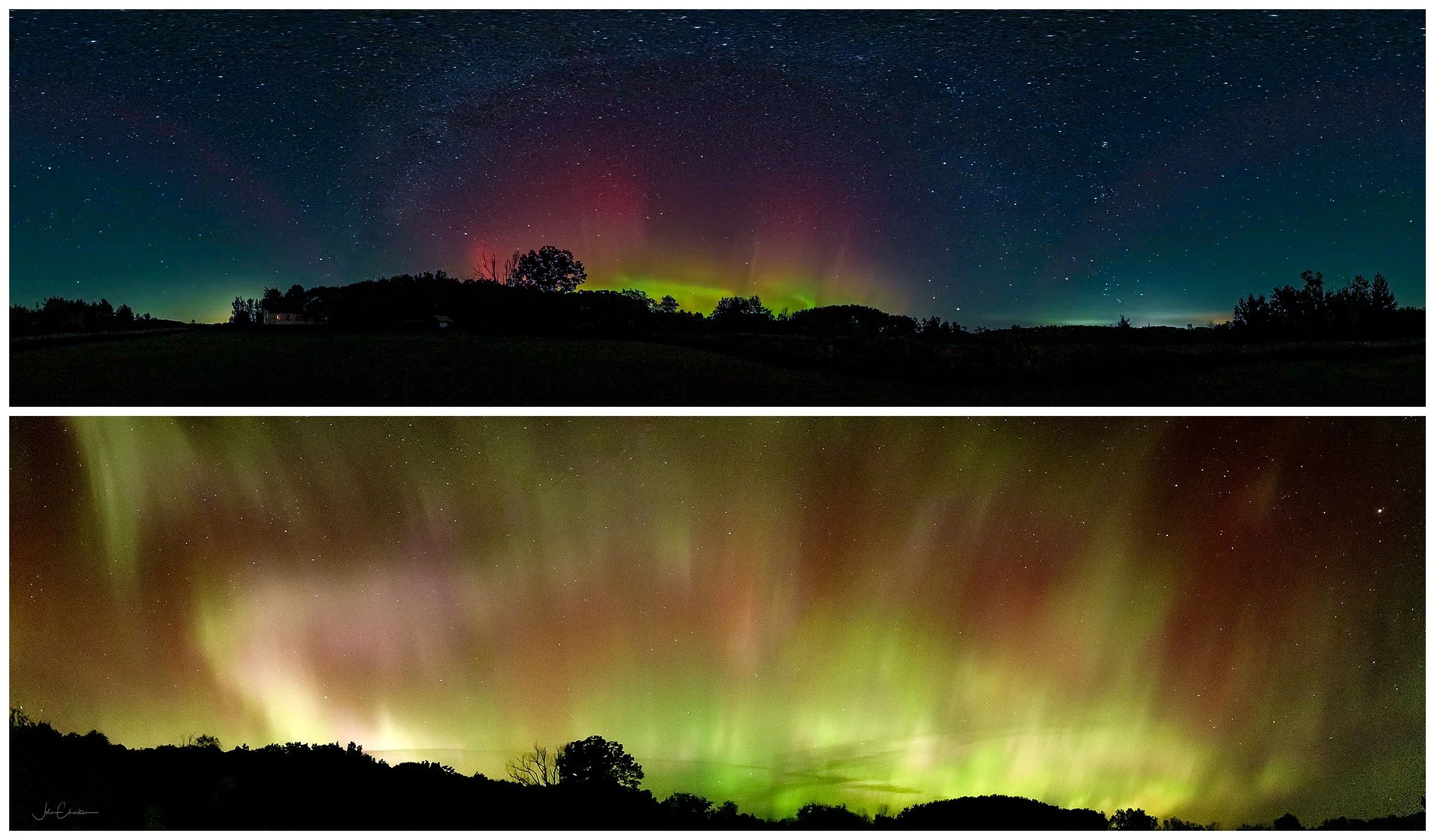
Also see the pictures below talked about on the show, made in 2024. See John’s Substack profile.

VIDEO LIBRARY
The following videos or subjects are referenced within today’s show.