#514 THE ONE: BIG PICTURES FROM 2025 PART 2
FEATURING FIVE SPECIAL GUEST PHOTOGRAPHERS
Late last Autumn, I asked you to send me one photograph you made in 2025. Not a greatest hit and not something that had done well online, just the one you kept coming back to when nobody else was watching. The one you might show a friend and say, “Yeah, this really means something.” What arrived was more than I expected. Over a hundred pictures came in, each with a story attached, some short, some long, some so open it made me pause. The level of trust that this show evokes never feels normal, and this project really brought that home. THE ONE was never meant to be a competition. There was no ranking, no winners, no pecking order. The pictures we talk about are simply the ones that made me stop, sometimes because of the image, sometimes because of the story sat behind it. I invited 10 photographers over two weeks to talk about their work, and this is the second of those two special editions. If your picture is not part of these two episodes, it doesn’t mean it was missed. This grew bigger than anyone expected, and THE ONE now has a home on the website, ready to be returned to throughout the year.
John Lancaster talks about a health scare that pushed him to look at both life and photography differently. Wendy Brandon takes us out onto the water, finding calm among whales and ice. Jan van der Hooft shares a deeply personal story of love, loss, and what it means to keep making pictures. Michael Tenbrink brings his blurred, dreamlike landscapes into the mix, while Gene Westberg reminds us that some of the best images happen when you wander off the main path.
Also today, an invitation to come to Scotland in 2026 and further afield to India, Mongolia and Venice.
Email your stories, thoughts, and pictures to the show. If you can optimize/resize photos to 2,500 pixels wide, that’s always much appreciated. If you’d like to support this show and have access to further content and the midweek Extra Mile show, we’d welcome you as an EXTRA MILER. There’s also our thriving Facebook group, a safe place to meet and talk with photographers of all interests, the Photowalk YouTube channel, plus the show is featured on Instagram, VERO and X.
As well as our Extra Milers, we’re also supported by our friends at Arthelper.ai who make marketing easier, helps more people find your work, and keeps your voice true—so you can get back to what you love most: making art. Enter PHOTOWALK at checkout to receive 30 days of the pro version free.
PLEASE HELP TO BUILD OUR COMMUNITY BY SHARING THIS EPISODE TO YOUR FAVOURITE SOCIAL PLATFORMS
LEARN:
MORE ABOUT names, words, THE MUSIC and places FROM TODAY’S SHOW
Join us on the Black Isle near Inverness, for the Scotland ‘26 retreat, staying on a working soft-fruit farm with Highland views. The retreat includes small creative workshops, from photogravure printing to sound and writing sessions, plus plenty of time to walk, talk and make photographs together.
Kodak Magicube (Magiflash) were little plastic cubes you used to see perched on top of ‘old’ film cameras. Each side held a single-use flash, so every time you took a picture, the cube clicked around, and a new face was ready to go. No batteries, no cables, just a tiny built-in charge that fired the flash and lit up the room for a split second.
Alfred Wainwright’s hand-drawn guides map every fell in the Lake District, mixing walking routes with sharp, funny, deeply personal notes that have shaped how generations explore the hills.
Remember My Baby is a UK charity that provides free remembrance photography for families whose baby has died, creating gentle, dignified images that help parents hold on to their child’s place in the world.
See Canada’s Pacific Perinatal Foundation, which provides specialist counselling for infertility and pregnancy loss, offering compassionate, one-to-one support tailored to the emotional reality of what people are going through.
Mark Cornick is a Surrey-based photographer in the UK, creating abstract, contemporary coastal landscapes, shaped by a lifelong connection to the beaches of West Cornwall.
The Argus C3 is a solid, brick-like 35mm rangefinder from the 1940s and 50s, famous for its rugged build and straightforward, no-nonsense design.
Finn Hopson is a photographer from Brighton. Having spent many years cycling and walking on the South Downs he now spends his time photographing them, trying to capture the unique places, shapes, patterns and textures of the UK's newest national park.
Kelvin Brown’s flickr Photowalk inspired group - join by invite by clicking on to THIS LINK.
MUSIC LINKS: Christen Ball wrote today's playout song Blue. Music on the show is sourced primarily from Artlist and also features in Michael Brennan’s Spotify playlist GoFoto. For Apple Music users, follow this playlist.
CLICK LINKS FOR OFFERS AND SUPPORTERS


THE SHOWPAGE GALLERY
IN ORDER OF APPEARANCE: JOHN LANCASTER
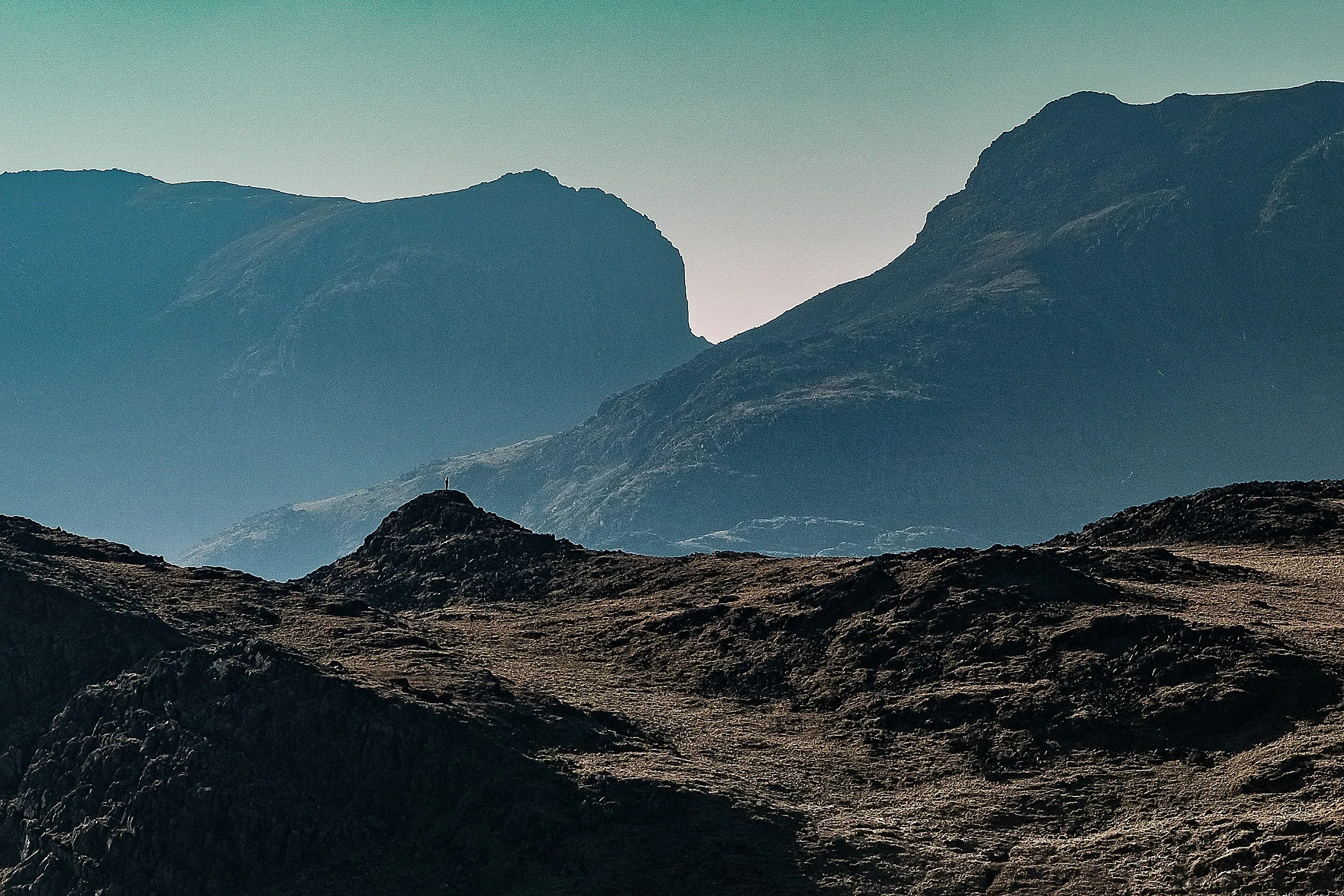
Since about 2019 I’ve been a keen hiker, mainly in the Lake District, and I’ve been following in the footsteps of AW, completing the 214 in 2023, and just 7 short of a second round, as I accompany a good friend on his quest. I first discovered AW back in the early 70s, on an annual school fell walking holiday to Coniston, which I had the pleasure of attending on three occasions. The driving force behind these trips at the time was Ray French, ex-rugby international, then English master and soon-to-be BBC Rugby League commentator. Ray was a legend.
I continued random walks in the lakes during my teens with various groups and friends, but these ceased as work and life came along and became annual trips to Bowness to wander around the tat shops.
In 2015, I retired early from the NHS and purchased my first DSLR. I’d always had cameras, including a couple of SLRs, but they had been used to take photos in the way people now use a phone, not as a photographer.
So, back to early 2015, and I was doing some internship work in Stoke and I remember well the day of the solar eclipse. I felt a bit shivery as I tried to figure out my new Nikon. Cut to the chase, three days later, I was fighting for my life - literally- with myocarditis and acute heart failure, and it wasn’t looking good. Anyway, I survived, and those first few weeks as I sat at home, unable to get upstairs, or eat much, listening to my irregular heartbeat, awaiting my appointment to shock things back to normal, I started taking photos of the daffodils, and the garden coming to life. I bought a macro lens from Currys for the purpose, which was awful, but did the trick. As the year progressed, I started to embrace street photography in Liverpool, which I still practice. I also came up with a plan to walk the Wainwrights, much to everyone’s dismay and disbelief.
Fast forward to 2017, and I climbed haystacks in February, made a slow start, but renewed my determination during the Covid years, and really got cracking in July 2020.
My camera accompanied me, and at some point in that journey, it became an equal part of the equation, not just a way of recording it.
My heart is now “normal” thanks to the exercise of walking, and I doubt 11 years of medication, and a couple of procedures I won’t bore you with. Walking and photography are responsible for me being here; I’ve no doubt about them. That possibly answers the why question!
See John’s Wainwright summits on Instagram.
WENDY BRANDON
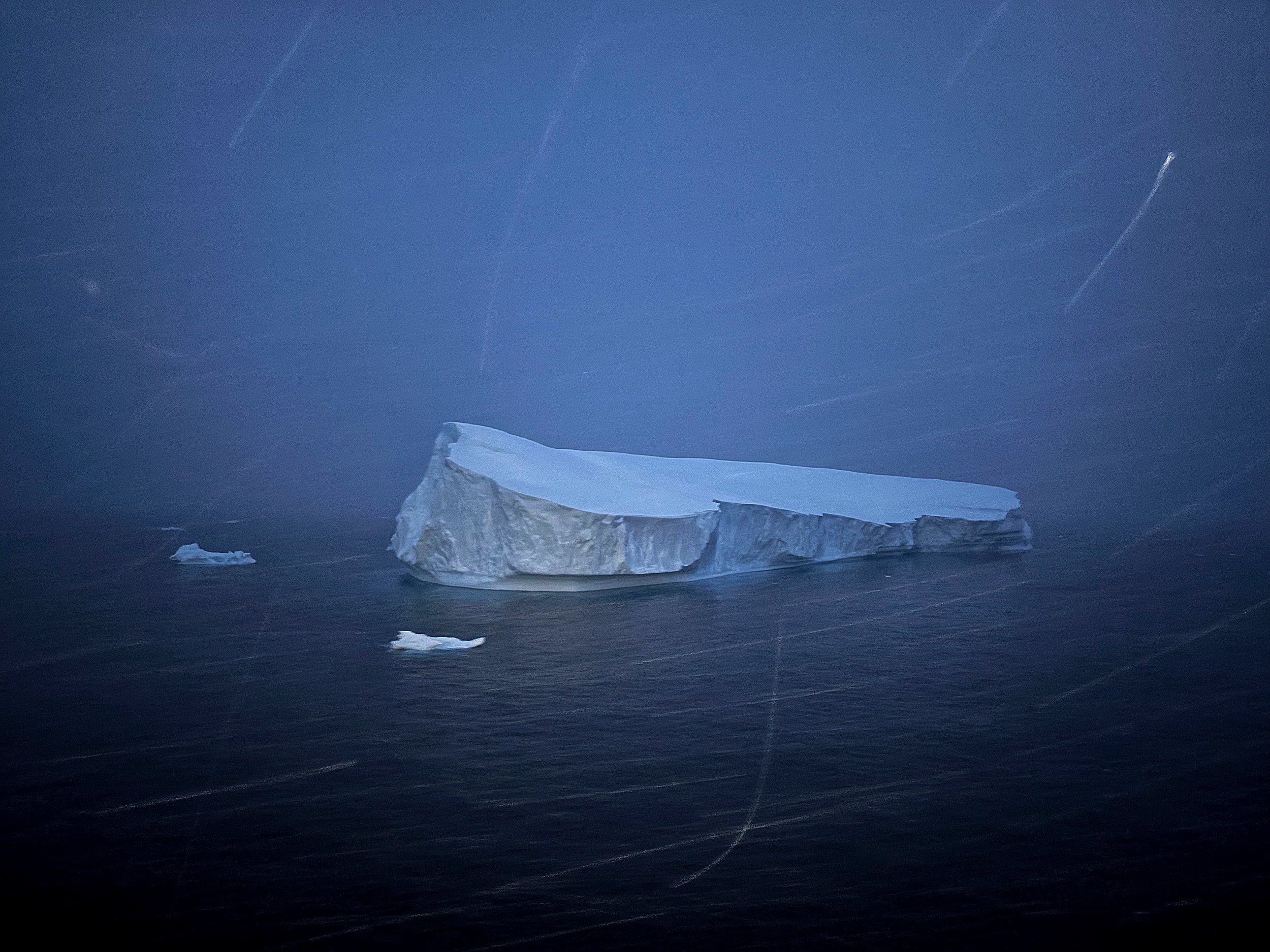
What a great idea - The One - and quite a challenge as I travelled to Antarctica this year. It was the last voyage of the season (in March) so the weather and light varied from sunshine to heavy snow and wind. It was an Intrepid expedition and our ship was an icebreaker built in a Polish shipyard in 1986. A real workhorse that took us as far south as the ice would allow. At one point we were the southernmost ship on the planet. How lucky we were, and how privileged to share that place with its inhabitants - unforgettable!
How to choose one photograph from so many?? The 'chosen one' is not the most technically perfect, nor is it a grand vista or a fantastically surreal-shaped iceberg of which there were many. But, for me, it is loaded with memory, the atmosphere of that special place, and how I felt immersed in it. It was made very early one morning - I was up around 4.30am and sat out on the deck in the snow, moving inside at regular intervals for a hot chocolate as I needed. The only sounds were the hum of the ship's engines, the pitter of snow and the 'chirruping' of a pod of whales as they passed by, communicating with each other in the darkness and near dawn. I'm not a poet, but while I sat there in that magical, dreamlike space, alone and enjoying my solitude, a small poem to accompany this image felt 'right':
I eavesdropped on whales
passing by.
I heard them breathing
in the dark.
And watched them.
And I heard the crunch of ice
against the bow of our ship.
An intruder in that place,
but grateful.
Cheers Neale - thanks for the company in the mornings when I walk with my dog, and all best wishes to you and your family for 2026.
From Aotearoa-land
See more of Wendy’s work on her website.
JAN VAN DER HOOFT
The following story has been submitted with full permission from all affected by this event.
In the very early days of 2023, my wife and I were set to welcome our firstborn, Willem, into the world. Everyone was coming off from the holiday highs, and we were eager to introduce our little one to the family. We went to the hospital a few days past our due date to investigate some mild discomfort and bleeding my wife was experiencing. Upon arrival and following a thorough check, everything with the baby and mother seemed to be fine. In an abundance of caution, we spent the night there (or rather my wife did, as the Covid rules at the time did not technically allow me to stay overnight) with a plan for further testing in the morning, including a detailed ultrasound. When the next day’s scans appeared to be normal, it was determined that an induction was to be started at noon since we were within the normal window for such a procedure. We made the most of our afternoon on the Labour and Delivery ward without incident, and when the time came for me to head home again for the night, I did so without much thought. The regular heart rate checks throughout the day had shown normal activity, and the symptoms of the night before had not returned.
Then in the middle of the night, I got a phone call from my wife; it was around 1:30am and in tears she’d told me that she’d woken up feeling quite sick. She also told me the nurse had been unable to detect a heartbeat using the Doppler monitor. I did my best to calm her and then myself, so that I could go back to the hospital to be with her. The drive was a cautious, lonely and resigned one. When I arrived at the hospital, I was given more details and told that the MFM/OBGYN was on her way back, after a full shift, no less, to try and assist with our situation. She’d been the one to start the induction. By this point, my wife’s labour had begun as expected, so we paced the halls, dreading the worst. When the doctor arrived, another Doppler test confirmed our fears that Willem had, in fact, passed away.
The next several hours were a bit like a bad movie, in that the time seemed to drag on and then leap forward without warning or any sense of predictability. We elected to deliver the baby naturally, as there was no longer a risk to him or to my wife. A process that, according to the medical staff, was as routine as it comes. When he was finally born, mid early/morning the next day, my wife had been in labour for just under nine hours. Our beautiful son came out looking perfect, except for having passed in utero. The midwives informed us that it was very likely a cord accident, as a section of it had preceded the head in delivery, and it was therefore reasonable to assume it had become pinched or caught at some point while my wife had been sleeping the night before.
Of course, we were devastated; We didn’t know what to do, we didn’t know what to say to family, friends, or even strangers. Thankfully, the hospital staff and our midwifery team were incredible. They took care of everything, including getting Willem cleaned up and into a cold cot, and us into a private room to spend some time as a family. I’m not sure how long hospitals have been doing this, but they can actually keep a baby cool and in good shape for a fairly reasonable amount of time when these events occur. It gives families a chance to see, touch and be close with their children in a way (should they choose) that wasn’t permitted, possibly even ten or fifteen years ago. The staff also helped us through taking footprints and measurements, and arranging a variety of options for us in terms of social supports.
One of those particularly relevant supports was the option of having a volunteer photographer in to take a few family photos for us. Of course, this was of specific interest to me in a strange way, being a photographer myself; I’d even packed my just-purchased, brand new, mirrorless Canon body in our ‘Go bag’ to take some shots after the birth. I never dreamed that someone would come and do that for people in our situation, but I am forever grateful to have professional-level keepsakes of the day I became a father for the first time. One of these photos is still my smartphone lock screen wallpaper, nearly three years on.
As we moved forward through the next days and weeks, slowly but surely, I leaned on photography more and more, finding a renewed interest in shooting film, due to the slower pace, and tactile experience. As you might imagine, I found it very difficult to be out in the world, trying to go about the regular day-to-day activities, having been through such an event. This new subgenera offered me a way to still be outdoors and around people in social situations, but offered the option of retreat, into the focused task of shooting when things felt overwhelming.
Fast forwarding now, I’ll go to the very early days of 2024. By this point, I had fallen much further down the rabbit hole of shooting film and collecting cameras, having amassed a rather large lot of about twenty or so different bodies and lenses. One of those pieces of gear was a bit of a unique combination: a well-brassed Nikon F and a beat-up 50mm f1.4 lens once owned by photographer George Diack. George was one of the former Photo Editors for the Vancouver Sun, and had an award-winning 44-year-long career. I happened to come across this camera in an antique store on Vancouver Island, while my wife and I were out for an adventure. It also happened to be the one-year anniversary of Willem’s death, and I guess you could say part of my inclination to purchase it was inspired by that coincidence. After all, a large part of the reason I felt the desire to shoot film was related to our experience.
Jumping to August of 2024 and the birth of our second son James. I’m sure you can imagine that with a new baby in the house, we were both especially eager to capture some memories. In particular, I wanted to shoot on film, and once we got acclimated to the new household rhythm, I did a lot of that.
Jumping forward again, though just six months this time, brings us at last to my chosen photo. My One.
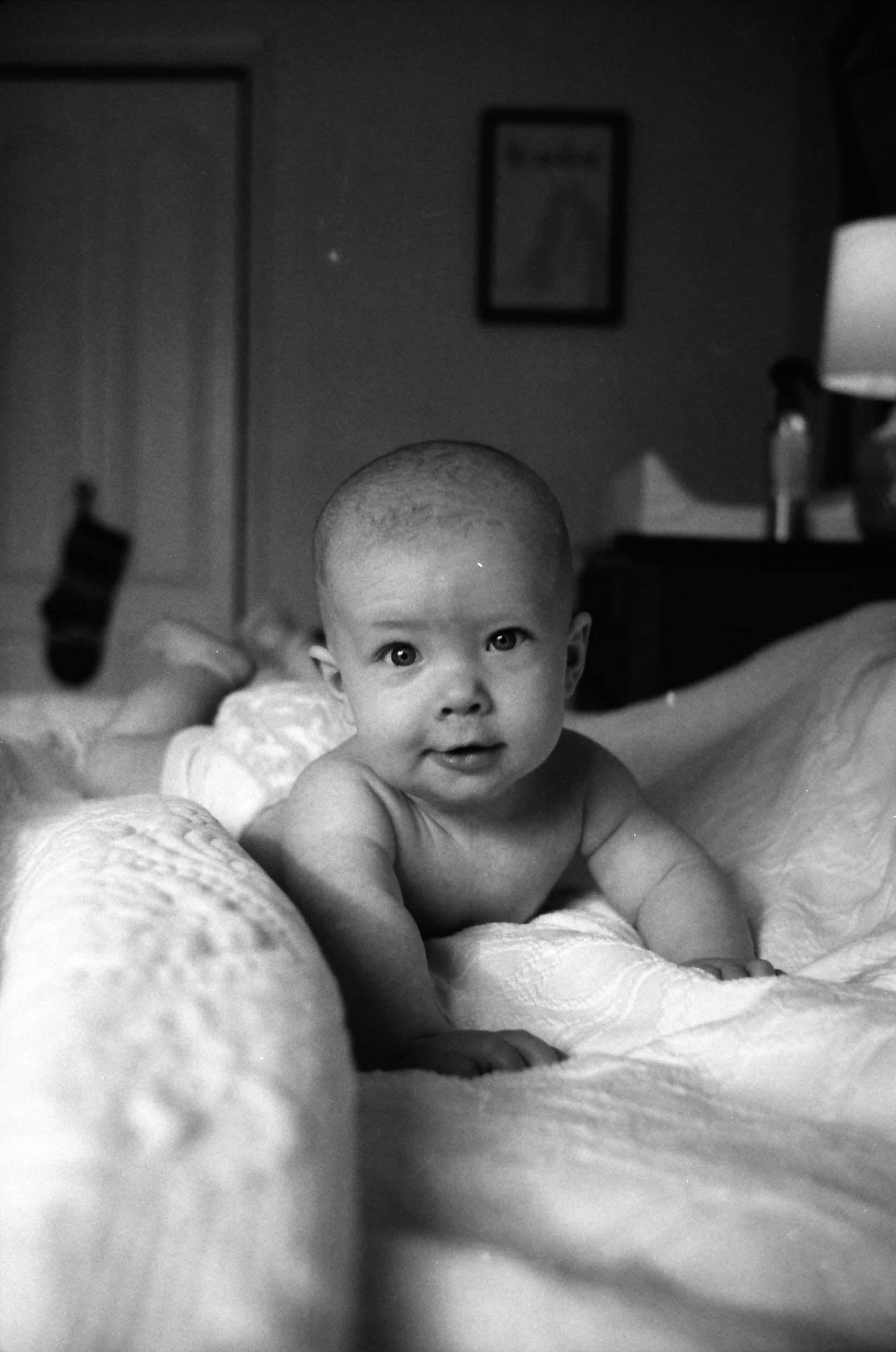
It is a shot of James taken with the Nikon F, I just highlighted above, in either late January or early February, 2025. I grabbed it while he was lying on his stomach on our bed, lit by the mid-February sunlight flowing gently through the large window behind camera. What I love about it, aside from his smile of course, are the following “photographer” things;
The leading line of the blanket, bottom left, guides the viewer instantly to his face, and then continues on along behind to his feet. The overall balance of light and dark, as well as the tonal shifts and variations in the background, are also notable. I’m also pleased with it because I develop my own black and white film, and feel as though the process is still a bit of a guessing game. If memory serves, this roll was processed in mid-March, with CineStill’s D96f Monobath.
In the scanning and editing process, I did do a little digital dodging and burning to get the exposure just how I wanted, but not much over all. I also toyed with the idea of removing the artefacts and dust, but because I’m not entirely sure at which point they appeared on the photo, I decided to leave them as is. I felt that despite having a lot of wonderful tools like Photoshop, and LightRoom at my disposal, my journey to fatherhood also hadn’t turned out “perfectly exposed, and free of dust and debris”. It felt right to embrace that; something I continue to try and hold as a goal in my work.
I suppose it’s fitting to end this letter with a bit of a present-day verbal snapshot of where we are at the end of 2025. Both my wife and I have worked hard to rejoin the world together and having James around has certainly helped that. In addition to working, caring for James, teaching (voice lessons, the both of us) and of course photographing, Anna and I have both begun volunteering to support families who have also gone through loss. She works as a board member for a local support organization called the Pacific Perinatal Foundation, and I joined a pair of photographers who volunteer to shoot for bereaved families at the hospital where both our sons were born. And, we are coming up to 6 months into our next and hopefully last, pregnancy.
Things can still be hard, of course; Knowing that we were so close to already having two under two, and watching James grow, makes us both pause from time to time, missing what could have been. Just like the photo I submitted though, maybe life’s not supposed to be perfect, and, perhaps especially, not in the way you might fancy yourself being okay with imperfection. Maybe it’s supposed to be a continual process of overcoming challenges without much warning. Strength in putting one foot in front of the other.
Thank you kindly for reading, and for creating a community where I (and many others who’ve already shared a story or two with you) felt comfortable writing. I’ve not really had an opportunity to do so thus far, and even just getting it put down on paper seems to make the load feel a little easier.
Regards,
Jan van der Hooft
See more of Jan’s work on his website.
MICHAEL TENBRINK
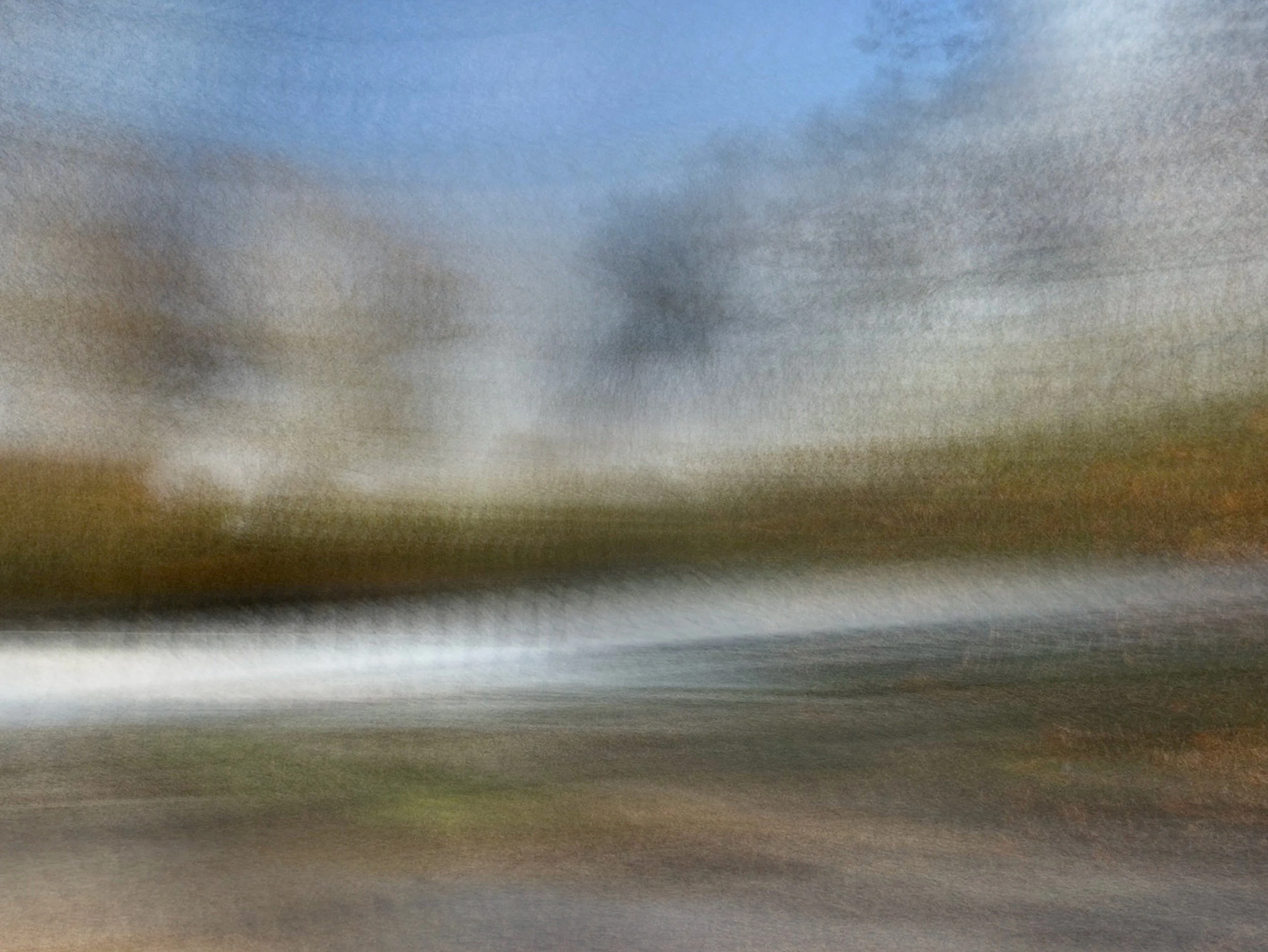
In September, while en route from Edinburgh to Inverness for the Photowalk retreat, I began taking photos out the train window of the Scottish countryside. I found it very enjoyable, and the resulting blurry photos got the wheels turning in my mind. I experimented throughout the week with longer exposure times and intentional camera movements. I've continued to play with this in the months since, and it’s ended up taking my work in a completely unexpected direction. I’ve now made hundreds of what I’ve taken to calling “blurscape” photos. Here is one favorite, shot at a park outside of Milan, Italy, where I live. It reminds me very much of a painting, which gives me a certain satisfaction, since I couldn’t actually paint to save my life!
Read more from Michael on Substack.
GENE WESTBURG
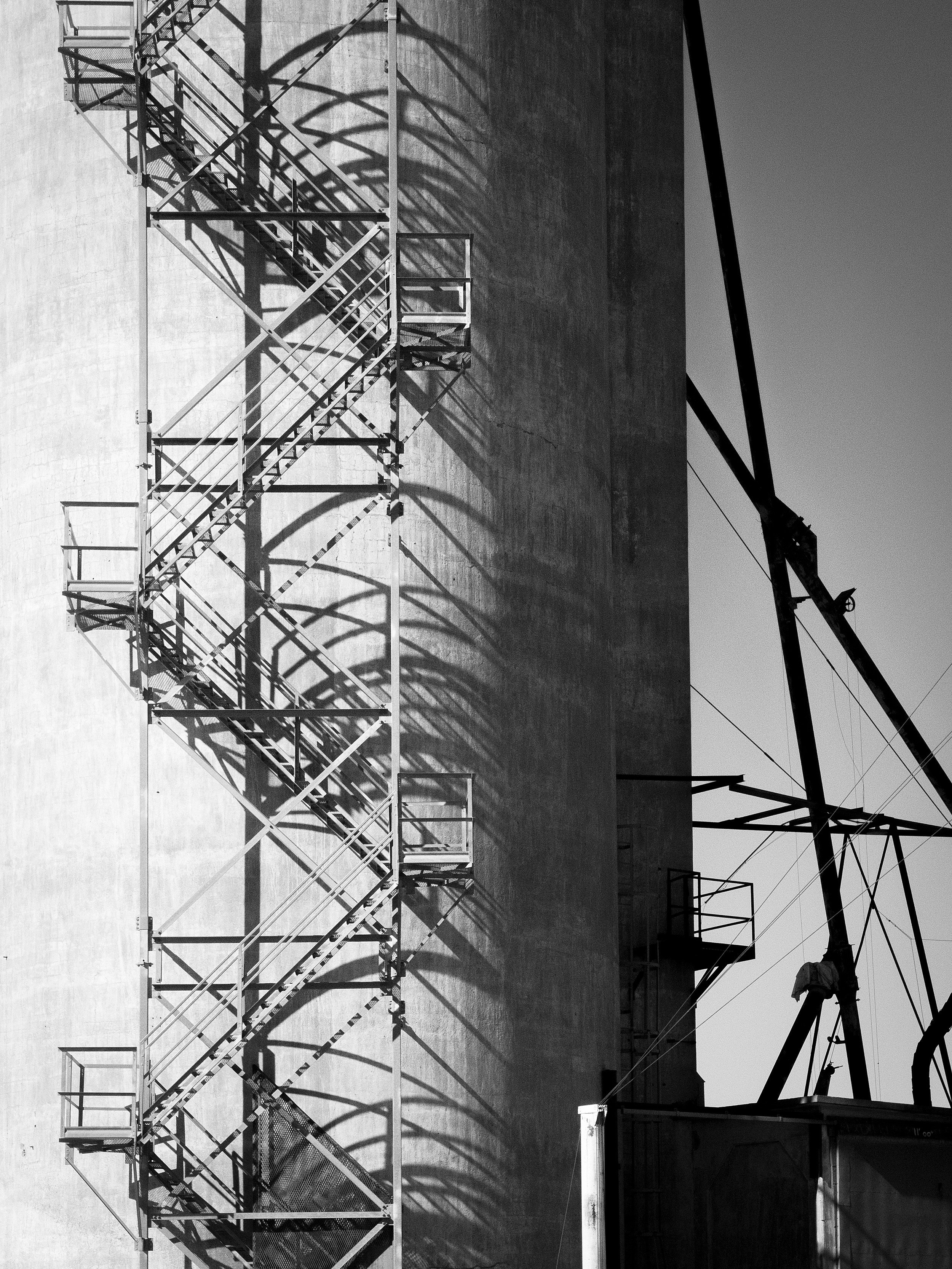
Why is this “The One” for me in 2025? It reminds me one doesn’t have to travel to gritty inner cities to capture abstract, modernist or minimalist images. They are everywhere for the observant viewer.
Southwest of Dodge City is Copeland, Kansas, population 241. An agricultural community surrounded by grain fields; Copeland is typical of towns scattered throughout middle America. A nondescript crossroads on the way to somewhere else.
Over the years I’ve noticed my photographic “style” leans toward geometric abstracts incorporating shadows and space. When I saw this out of the corner of my eye the little photographer’s voice in my head said “turn around or you’ll regret it later”.
I’ve learned to listen.
See more of Gene’s work on Flickr.

VIDEO LIBRARY
The following videos or subjects are referenced within today’s show.
Black Crag aka Glen, mentioned during the show today. Below the film where he found a ghost in the middle of a night hike!